

In the copy paper industry, product quality is often evaluated based on technical indicators such as brightness, grammage, opacity, and print performance. While these factors are critical, they represent only part of the overall product experience. In reality, a significant portion of the perception of copy paper quality is determined before the paper is ever placed into a printer. This is where packaging becomes a decisive factor.
For distributors, private-label brands, and corporate procurement teams, packaging is not simply a logistical necessity. It is a functional system that protects paper quality, supports efficient operations, and reinforces brand credibility throughout the supply chain.
Table of Contents
Copy Paper Quality Risks Across the Supply Chain
From production to end use, copy paper passes through multiple stages, including factory storage, inland transportation, export handling, international shipping, warehousing, and final distribution. Each stage introduces potential risks that can compromise paper quality.
Humidity is one of the most common threats. Even minor moisture exposure can lead to paper curling, waviness, or reduced print performance. Mechanical stress is another frequent issue. Improper stacking or insufficient carton strength can cause corner damage, edge compression, or deformation of entire reams. Dust contamination and repeated handling further increase the likelihood of surface defects.
These issues often occur long before the paper reaches the end user, yet they directly affect customer satisfaction, return rates, and brand reputation.
Packaging as a Functional Protection System
Effective copy paper packaging should be viewed as an engineered protection system rather than a simple outer box. Its purpose is to control environmental exposure, manage mechanical load, and maintain paper stability throughout circulation.
Structural strength is crucial for supporting stacking pressure during warehousing and container loading. Moisture resistance helps stabilize paper properties in varying climates. Internal stability prevents movement inside the carton, reducing friction and edge wear. When these elements are designed in isolation, performance is inconsistent. When they are integrated, packaging becomes a reliable safeguard for paper quality.
Key Packaging Design Elements That Impact Paper Performance
Different packaging features contribute to paper protection in distinct ways. Understanding their functions helps buyers evaluate packaging quality more accurately.
| Packaging Element | Primary Function | Effect on Copy Paper |
|---|---|---|
| Reinforced Corrugated Structure | Load-bearing support | Prevents bending and compression |
| Moisture-Resistant Outer Surface | Environmental barrier | Reduces curling and moisture absorption |
| Smooth Inner Lining | Surface protection | Minimizes dust and friction |
| Accurate Internal Dimensions | Movement control | Protects edges and corners |
| Secure Closure Design | Package integrity | Prevents contamination during handling |
These elements must work together. A strong outer carton alone is not sufficient if internal dimensions allow excessive movement or if moisture resistance is inadequate for long-distance shipping.
Packaging and Logistics Efficiency
Beyond protection, packaging directly influences logistics efficiency and operational cost. Cartons designed specifically for copy paper dimensions improve pallet stability and reduce void space. This allows for more efficient container loading and lowers shipping cost per unit.
Standardized, well-designed packaging also simplifies warehouse operations. Predictable stacking behavior reduces handling errors, minimizes damage caused by improper storage, and improves inventory accuracy. For businesses managing high volumes, these operational efficiencies translate into measurable long-term savings.
Poorly designed packaging, by contrast, often leads to higher damage rates, increased labor time, and avoidable logistics expenses.
The Impact of Packaging on Customer Experience
Copy paper is typically a repeat-purchase product. Customers expect consistency. When paper arrives with bent corners, uneven edges, or moisture-related defects, it undermines confidence in the brand, even if the paper itself meets technical specifications.
In B2B environments, where purchasing decisions are based on reliability and long-term performance, packaging quality becomes a silent indicator of supplier professionalism. Clean, intact, and well-structured packaging signals attention to detail and commitment to quality.
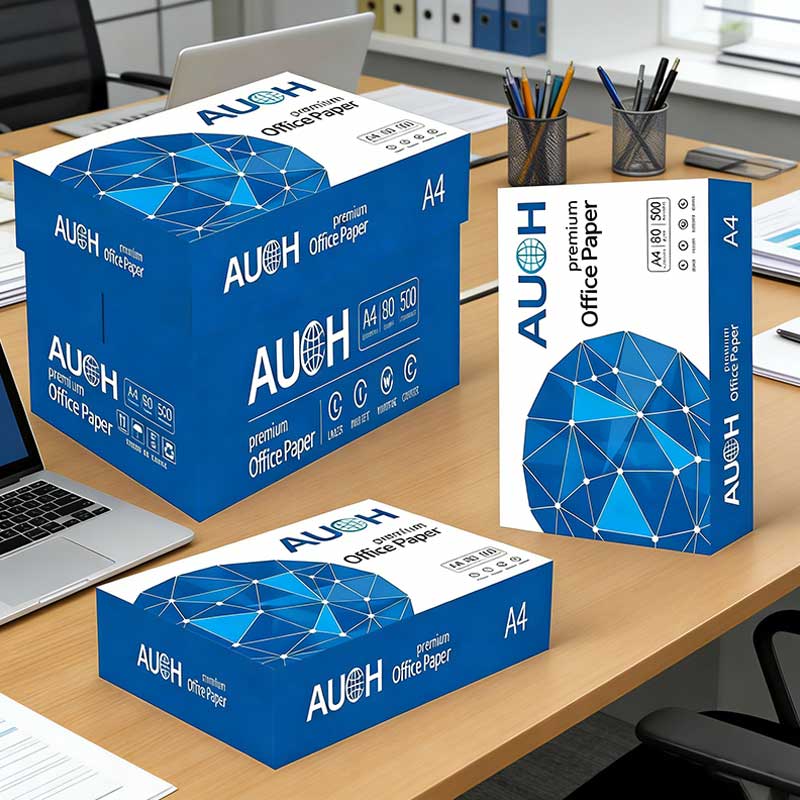
For private-label brands, packaging is often the most visible representation of the brand. It shapes first impressions and reinforces positioning in competitive markets.
Why Integrated Paper and Packaging Planning Is More Effective
When copy paper and packaging are developed independently, compromises are often unavoidable. Packaging may be oversized to accommodate multiple paper formats, or under-reinforced due to cost constraints. These compromises increase risk and reduce efficiency.
Integrated planning aligns paper specifications with packaging design from the beginning. Packaging is engineered based on paper size, weight, stacking load, and distribution environment. This approach improves protection, reduces damage rates, and simplifies supply chain management.
For buyers, working with a supplier capable of coordinating both paper and packaging reduces communication complexity and shortens lead times. It also ensures accountability, as there is a single point of responsibility for overall product performance.
Who Benefits Most from Proper Copy Paper Packaging
Effective packaging solutions are particularly valuable for office supply distributors, importers serving multiple climate zones, private-label brands, corporate procurement teams, and e-commerce sellers. These buyers operate at scale, where even small improvements in damage reduction or logistics efficiency can produce significant cost benefits.
For these businesses, packaging quality is not an optional upgrade. It is a core component of risk management and brand strategy.
Conclusion
Copy paper quality does not depend solely on paper manufacturing. Packaging plays a critical role in protecting performance, supporting efficient logistics, and shaping customer perception throughout the supply chain.
Businesses that treat packaging as an integrated part of the product rather than an afterthought are better positioned to reduce losses, strengthen brand credibility, and deliver consistent value to their customers. In a competitive market, proper copy paper packaging is not just about protection. It is about building a more reliable and professional supply system.
FAQ
How does packaging affect copy paper quality?
Proper copy paper packaging protects paper from moisture, dust, and mechanical stress, helping maintain flatness, print performance, and overall usability throughout the supply chain.
What packaging features are most important for copy paper transport?
Key features include reinforced corrugated structure, moisture-resistant outer layers, accurate internal dimensions, and smooth inner linings to prevent movement and damage.
Can poor packaging cause printing problems?
Yes. Damaged or moisture-affected paper can lead to paper jams, uneven feeding, and reduced print quality, especially in high-speed office printers.
Why is packaging important for private-label copy paper brands?
Packaging is often the first physical touchpoint for customers. High-quality packaging reinforces brand reliability and ensures a consistent professional image.
Is customized packaging better than standard cartons for copy paper?
Customized packaging designed specifically for the paper size and weight offers better protection, lower damage rates, and improved logistics efficiency compared to generic cartons.