
Table of Contents
Roll vs sheet ream packaging should be specified against the intended paper product, packing operation and distribution route. Roll and sheet supply serve different wrapping processes. A continuous roll must match the unwind, feed and cutting requirements of the line, while a pre-cut sheet must match the individual wrapping operation. The choice should follow the equipment and production mix rather than a general assumption that one form is always more efficient.
Define the scope of roll vs sheet ream packaging
Compare the complete material flow: storage, loading, changeover, waste handling and finished-pack consistency. Roll supply introduces core, diameter, winding and repeat requirements. Sheet supply introduces count, orientation, flatness and handling requirements. Both still need an approved material construction and a finished ream fit check.
How to evaluate roll vs sheet ream packaging
Trial the proposed form with representative product sizes and artwork. For rolls, include loading and a changeover. For sheets, observe separation and presentation to the operator or feeder. Record usable output and rejected material on a consistent basis. A trial of the easiest SKU alone may not represent a program with frequent format changes.
Compare the purchasing options and evidence
The following comparison turns roll vs sheet ream packaging into a specific purchasing conversation. The right-hand evidence column identifies what the buyer should request before accepting the proposed approach. It is a decision aid, not a universal specification or a supplier performance claim.
| Review item | Incomplete approach | Preferred approval basis | Evidence to retain |
|---|---|---|---|
| Process | Choose by unit price alone | Match supply form to wrapping operation | Observed workflow |
| Interface | Same specification for rolls and sheets | Form-specific dimensions and presentation | Technical order brief |
| Comparison | Best-case output only | Changeovers and rejected material included | Trial production record |
Work through a practical example
A paper mill with long runs may prefer a roll-based process, while a smaller operation packing several short-run sizes may find sheets easier to organize. Those are planning scenarios, not guaranteed economic outcomes. Compare actual setup time, material loss and staffing in the intended operation before choosing the supply form.
Review 500 sheet ream wrapper alongside roll vs sheet ream packaging
The decision about roll vs sheet ream packaging also interacts with 500 sheet ream wrapper. Review this connection where it affects the proposed material, production process or delivery configuration.
Keep paper size, basis weight and measured stack height as separate inputs. Two paper grades with the same basis weight may not produce identical stack thickness. Also identify the wrapping sequence and seam location, because these determine where additional material is needed for folds and overlap.
Measure several normal stacks and record the range without forcing them into an artificial compression state. Apply the proposed wrapper and inspect corners, end folds, seam engagement and printed-panel alignment. Check the largest and smallest relevant stack conditions. The wrapper should not depend on unusually tight manual folding to look acceptable.
Review copy paper packaging roll width alongside roll vs sheet ream packaging
The decision about roll vs sheet ream packaging also interacts with copy paper packaging roll width. Review this connection where it affects the proposed material, production process or delivery configuration.
First establish how the web is oriented relative to the ream and which dimension is controlled by roll width versus cut repeat. A drawing should identify both axes and the printed face. Ambiguous orientation can produce a roll with apparently correct numbers that cannot form the intended pack.
Measure production-representative reams and review the proposed width with the equipment owner. Check slit-edge quality and width variation on samples. Trial the material through folding and closure, observing whether excess width bunches at the ends or insufficient width leaves the fold incomplete. Do not use operator force to compensate for a dimensional mismatch.
Approve roll vs sheet ream packaging and control changes
Specify the selected form and its interface details in the order. If both forms will be purchased, keep separate item records even when the printed design is shared. Confirm which conversion steps are performed by Huasheng and which remain with the paper mill so neither side assumes the other will cut or orient the material.
Investigate a defect without losing the original evidence for roll vs sheet ream packaging
An investigation involving roll vs sheet ream packaging should start with a precise description of the symptom. Record where it appears, when it first becomes visible and which quantity is affected. Keep the original material and its identification. A broad statement such as poor quality leaves too many possible causes open and makes a useful supplier response harder to obtain.
Map the roll vs sheet ream packaging defect to the packaging and process. Look for repeated positions, directions or timing. Compare the affected area with nearby surfaces, joints, folds or machine contacts where relevant. A consistent pattern can guide the next check, but treat it as a hypothesis until the evidence supports a cause.
Preserve both affected and unaffected roll vs sheet ream packaging samples from traceable locations. Include the approved reference if available. Photograph the condition before destructive examination or attempted repair. Once the material is altered, a later reviewer may be unable to distinguish the original defect from changes introduced during troubleshooting.
Test one explanation at a time in the roll vs sheet ream packaging investigation where practical. Use a controlled comparison and record what remains unchanged. If several adjustments are necessary for a safe trial, document the combined scope and avoid claiming that one adjustment alone solved the problem. A limited but accurate conclusion is more useful than an unsupported root-cause statement.
Evaluate any proposed roll vs sheet ream packaging correction through the stage that produced the original defect. Check whether the change introduces a different problem elsewhere, such as altered fit, appearance or handling. Do not close the investigation merely because one sample looks improved immediately after adjustment; retain the relevant follow-up observations.
Close the roll vs sheet ream packaging issue with the agreed disposition, corrective action and revision references. Link recovered material to its original identity and state any limits on use. Feed the confirmed lesson into the next order's acceptance plan, while keeping unproven explanations clearly separate from the evidence that actually supported the decision.
Prepare a clear request for quotation
To discuss roll vs sheet ream packaging with Huasheng, provide the paper format, wrapped ream dimensions, intended quantity and the requirements highlighted above. Include the approved artwork if printing is involved, plus photographs or drawings that show the current packaging. Request confirmation of the proposed construction and sampling steps before production.
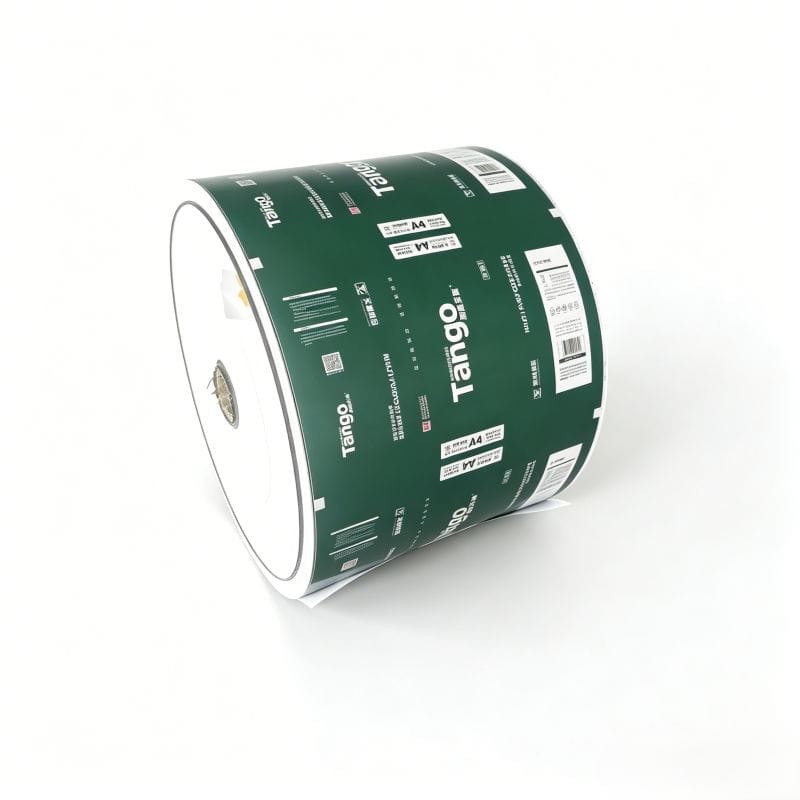
Review the relevant Printed Packaging Roll for Copy Paper Reams and custom packaging services when preparing the brief. A product photograph illustrates the packaging family; it does not establish a tested strength, exact size or machine setting for your order.
For additional context while evaluating roll vs sheet ream packaging, see Ream Wrapper Winding Direction: How to Approve a Printed Roll; Copy Paper Packaging Roll Specifications Buyers Should Confirm. Technical reference: ISTA guidance on retesting after changes. Ask the responsible specialist which method applies to the actual package and use case.
Send your roll vs sheet ream packaging requirements through the inquiry form below. State the items that are already approved and the decisions that still need a sample or technical review. A defined brief makes the supplier’s proposal easier to compare and helps the next production run follow the same accepted requirements.
Frequently asked questions
What should buyers confirm first about roll vs sheet ream packaging?
Roll and sheet supply serve different wrapping processes. A continuous roll must match the unwind, feed and cutting requirements of the line, while a pre-cut sheet must match the individual wrapping operation. Begin with the actual product and process so the supplier can review a defined requirement.
What evidence is needed to approve roll vs sheet ream packaging?
Trial the proposed form with representative product sizes and artwork. For rolls, include loading and a changeover. Keep the evidence linked to the roll vs sheet ream packaging specification and the sample used.
Can a photograph or a nominal specification replace a physical sample?
For roll vs sheet ream packaging, a photograph or nominal value documents only part of the requirement. Compare the complete material flow: storage, loading, changeover, waste handling and finished-pack consistency. Roll supply introduces core, diameter, winding and repeat requirements. Use the relevant measurements and functional checks before approval.
Which common purchasing mistake should be avoided?
When reviewing roll vs sheet ream packaging, avoid treating “choose by unit price alone” as complete evidence. Prefer “match supply form to wrapping operation” and retain the observed workflow. Specify the selected form and its interface details in the order.
What should be reconfirmed on a repeat order?
Reconfirm the approved roll vs sheet ream packaging specification, sample reference and any changes to material, geometry or operating conditions. Specify the selected form and its interface details in the order. If both forms will be purchased, keep separate item records even when the printed design is shared.