
Table of Contents
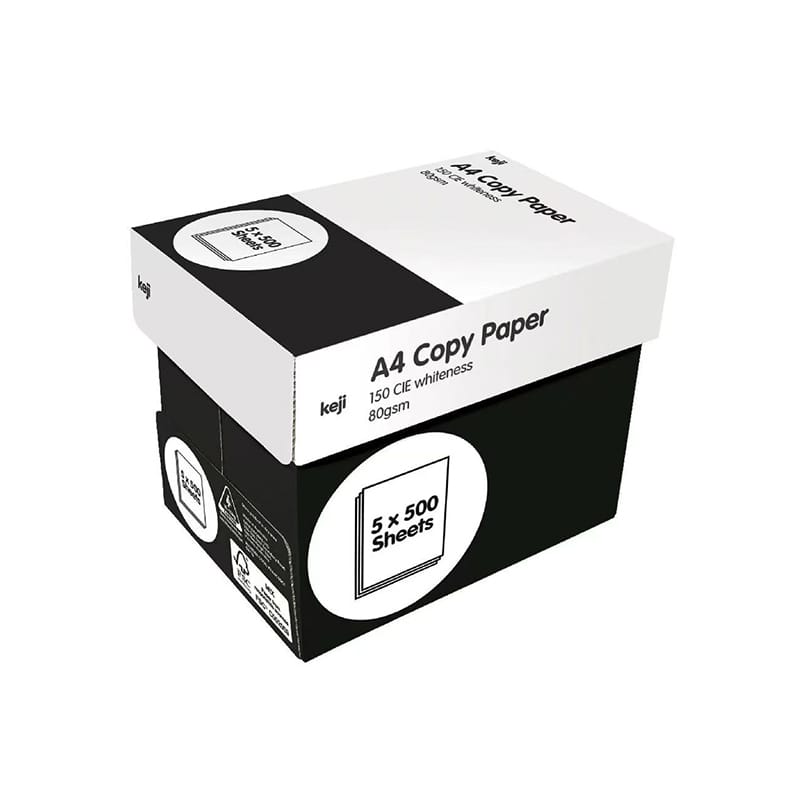
5 ream copy paper carton should be specified against the intended paper product, packing operation and distribution route. A five-ream format is a distribution decision as well as a dimensional one. It can suit smaller replenishment quantities, but doubling the number of cartons for the same paper volume may change handling effort and packaging consumption. Compare the complete route from the mill's packing line to the buyer who opens the box.
Define the scope of 5 ream copy paper carton
Keep the ream specification constant when comparing five- and ten-ream options. The apparent saving from a lighter carton can disappear if its footprint leaves unused pallet space or requires extra picks at the warehouse. Conversely, a smaller selling unit may avoid repacking at the distributor. Record where each carton is opened and whether its lid must remain usable.
How to evaluate 5 ream copy paper carton
Make a trial pack using the proposed five-ream arrangement and the intended board construction. Check closure pressure on the top ream and panel movement when the load is turned during normal handling. Reassess the pallet layout independently; reducing carton height does not automatically mean that twice as many layers are acceptable.
Compare the purchasing options and evidence
The following comparison turns 5 ream copy paper carton into a specific purchasing conversation. The right-hand evidence column identifies what the buyer should request before accepting the proposed approach. It is a decision aid, not a universal specification or a supplier performance claim.
| Review item | Incomplete approach | Preferred approval basis | Evidence to retain |
|---|---|---|---|
| Order unit | Quantity expressed as boxes only | Reams per carton stated explicitly | Order-to-packing-list reconciliation |
| Pallet use | Reuse ten-ream assumptions | Build a five-ream load trial | Actual layer arrangement |
| Cost basis | Price per empty carton | Cost per delivered ream | Carton, freight and handling worksheet |
Work through a practical example
An illustrative A4 ream of 500 sheets at 80 g/m² contains 2.4948 kg of paper. Five such reams contain 12.474 kg and ten contain 24.948 kg, excluding every packaging component. These are nominal mass calculations, not manual-lifting recommendations. Weigh the actual finished carton before agreeing handling equipment or transport quantities.
Review single ream paper packaging box alongside 5 ream copy paper carton
The decision about 5 ream copy paper carton also interacts with single ream paper packaging box. Review this connection where it affects the proposed material, production process or delivery configuration.
First decide whether the box is a retail pack, an internal transfer container or a shipping package. A retail box may later sit within a larger transit carton. A parcel pack can encounter handling conditions that are absent in a palletized load. The same graphic design can be applied to both, but the required structural evidence is different.
Measure the wrapped ream at its seams, choose the opening direction and examine the cut edges inside the sample. A tight friction fit may scuff the wrapper whenever the user removes it. A loose fit may allow repeated impacts at the paper corners. Check the box with the intended tape, locking tabs or other closure.
Review copy paper carton stacking height alongside 5 ream copy paper carton
The decision about 5 ream copy paper carton also interacts with copy paper carton stacking height. Review this connection where it affects the proposed material, production process or delivery configuration.
Record whether cartons are column stacked or arranged in an interlocked pattern, and whether there is pallet overhang. Identify interruptions in support from pallet gaps and consider how the load is restrained. A change in pack count or paper basis weight changes the load even if the external box dimensions stay unchanged.
Develop the proposed limit with the packaging supplier, warehouse team and an appropriate testing provider. Observe deformation at the bottom layer as well as the overall pallet. Define what would trigger stopping the trial, and use suitable handling equipment. A stack that remains upright can still compress reams or create removal problems inside the cartons.
Approve 5 ream copy paper carton and control changes
Approve the five-ream version when its selling-unit advantages justify its carton, handling and pallet implications. Retain the ten-ream option as a separate SKU if both are required. Packaging artwork, purchase quantities and pallet labels must all use the same definition of a carton to prevent a twofold counting error.
Investigate a defect without losing the original evidence for 5 ream copy paper carton
An investigation involving 5 ream copy paper carton should start with a precise description of the symptom. Record where it appears, when it first becomes visible and which quantity is affected. Keep the original material and its identification. A broad statement such as poor quality leaves too many possible causes open and makes a useful supplier response harder to obtain.
Map the 5 ream copy paper carton defect to the packaging and process. Look for repeated positions, directions or timing. Compare the affected area with nearby surfaces, joints, folds or machine contacts where relevant. A consistent pattern can guide the next check, but treat it as a hypothesis until the evidence supports a cause.
Preserve both affected and unaffected 5 ream copy paper carton samples from traceable locations. Include the approved reference if available. Photograph the condition before destructive examination or attempted repair. Once the material is altered, a later reviewer may be unable to distinguish the original defect from changes introduced during troubleshooting.
Test one explanation at a time in the 5 ream copy paper carton investigation where practical. Use a controlled comparison and record what remains unchanged. If several adjustments are necessary for a safe trial, document the combined scope and avoid claiming that one adjustment alone solved the problem. A limited but accurate conclusion is more useful than an unsupported root-cause statement.
Evaluate any proposed 5 ream copy paper carton correction through the stage that produced the original defect. Check whether the change introduces a different problem elsewhere, such as altered fit, appearance or handling. Do not close the investigation merely because one sample looks improved immediately after adjustment; retain the relevant follow-up observations.
Close the 5 ream copy paper carton issue with the agreed disposition, corrective action and revision references. Link recovered material to its original identity and state any limits on use. Feed the confirmed lesson into the next order's acceptance plan, while keeping unproven explanations clearly separate from the evidence that actually supported the decision.
Prepare a clear request for quotation
To discuss 5 ream copy paper carton with Huasheng, provide the paper format, wrapped ream dimensions, intended quantity and the requirements highlighted above. Include the approved artwork if printing is involved, plus photographs or drawings that show the current packaging. Request confirmation of the proposed construction and sampling steps before production.
Review the relevant 3-Layer Corrugated Carton for Copy Paper Export and custom packaging services when preparing the brief. A product photograph illustrates the packaging family; it does not establish a tested strength, exact size or machine setting for your order.
For additional context while evaluating 5 ream copy paper carton, see Legal Size Copy Paper Carton Guide For 8.5 x 14 Paper Packaging; Letter Size Copy Paper Carton Planning For 8.5 x 11 Paper Programs. Technical reference: FEFCO testing methods. Ask the responsible specialist which method applies to the actual package and use case.
Send your 5 ream copy paper carton requirements through the inquiry form below. State the items that are already approved and the decisions that still need a sample or technical review. A defined brief makes the supplier’s proposal easier to compare and helps the next production run follow the same accepted requirements.
Frequently asked questions
What should buyers confirm first about 5 ream copy paper carton?
A five-ream format is a distribution decision as well as a dimensional one. It can suit smaller replenishment quantities, but doubling the number of cartons for the same paper volume may change handling effort and packaging consumption. Begin with the actual product and process so the supplier can review a defined requirement.
What evidence is needed to approve 5 ream copy paper carton?
Make a trial pack using the proposed five-ream arrangement and the intended board construction. Check closure pressure on the top ream and panel movement when the load is turned during normal handling. Keep the evidence linked to the 5 ream copy paper carton specification and the sample used.
Can a photograph or a nominal specification replace a physical sample?
For 5 ream copy paper carton, a photograph or nominal value documents only part of the requirement. Keep the ream specification constant when comparing five- and ten-ream options. The apparent saving from a lighter carton can disappear if its footprint leaves unused pallet space or requires extra picks at the warehouse. Use the relevant measurements and functional checks before approval.
Which common purchasing mistake should be avoided?
When reviewing 5 ream copy paper carton, avoid treating “quantity expressed as boxes only” as complete evidence. Prefer “reams per carton stated explicitly” and retain the order-to-packing-list reconciliation. Approve the five-ream version when its selling-unit advantages justify its carton, handling and pallet implications.
What should be reconfirmed on a repeat order?
Reconfirm the approved 5 ream copy paper carton specification, sample reference and any changes to material, geometry or operating conditions. Approve the five-ream version when its selling-unit advantages justify its carton, handling and pallet implications. Retain the ten-ream option as a separate SKU if both are required.