
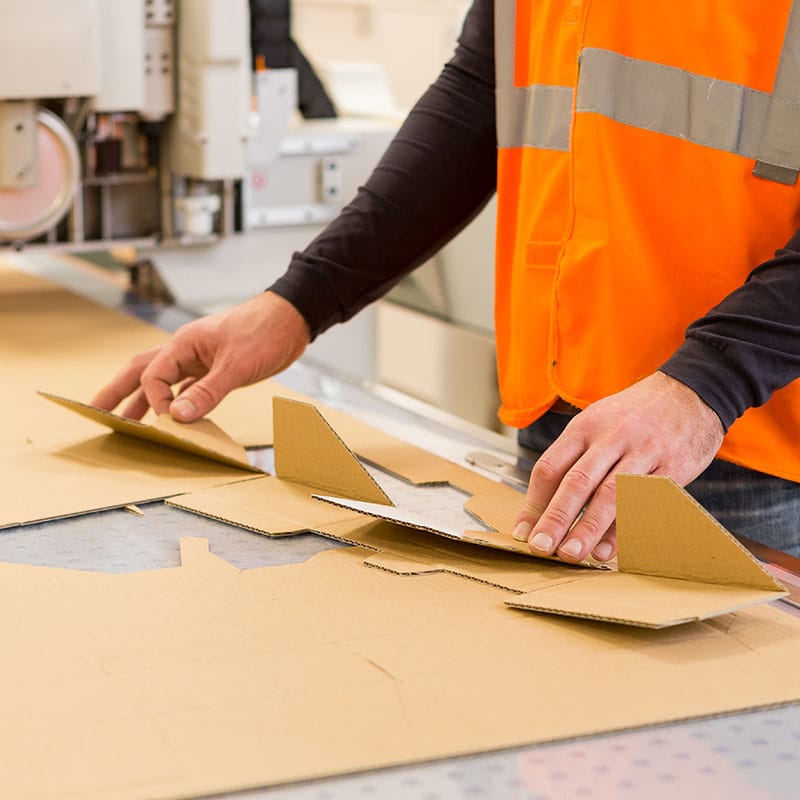
Copy paper may look simple, but its packaging is not simple at all.
For paper mills, office paper brands, distributors, and export suppliers, copy paper packaging directly affects product protection, warehouse storage, shipping safety, and brand presentation.
If the packaging is too weak, paper corners may bend during transport. If the wrapper does not protect against moisture, sheets may curl or stick together. If the carton size is not accurate, the whole pallet may become unstable.
That is why bulk buyers need to choose copy paper packaging carefully. A good packaging solution should protect the paper, support efficient handling, and make the product look reliable in the market.
Table of Contents
Why Copy Paper Packaging Matters
Copy paper is usually shipped in large quantities. Each carton may contain several heavy reams, and each ream must stay flat, clean, dry, and easy to handle.
For bulk distribution, packaging has several important roles.
It protects the paper during stacking, loading, and delivery.
It helps keep each ream clean and dry.
It supports stable warehouse storage.
It improves the appearance of the product.
It reduces complaints caused by damaged paper or broken cartons.
For B2B buyers, copy paper packaging should not be treated as only a cost item. It is part of product quality, logistics efficiency, and brand value.
Common Problems Caused by Poor Packaging
Poor packaging often creates problems before the paper reaches the final customer.
Bent Paper Corners
This usually happens when the carton is too loose, too weak, or not suitable for the paper size.
Once the paper corners are damaged, the product may look unprofessional and may be harder to sell.
Moisture Damage
Copy paper is sensitive to humidity.
If the ream wrapper does not provide enough protection, paper may absorb moisture during storage or shipping. This can lead to curling, wrinkling, or poor printing performance.
Carton Crushing
Copy paper is heavy.
If the outer carton does not have enough compression strength, it may collapse during pallet stacking or container loading.
Poor Brand Presentation
Packaging is often the first thing customers see.
Low-quality printing, inconsistent colors, or unclear product information can reduce buyer confidence, especially for private label paper brands.
Main Types of Copy Paper Packaging
Most copy paper packaging systems include two parts: the inner ream wrapper and the outer carton.
For some markets, buyers may also need custom printed cartons, export cartons, or packaging rolls for automatic packing lines.
Copy Paper Ream Wrapper
The ream wrapper is used to wrap each pack of paper.
It is commonly used for 500-sheet reams, 100-sheet packs, or customized pack counts.
What the Ream Wrapper Does
A ream wrapper helps protect paper from dust, moisture, friction, and light handling damage.
It also carries important product information, such as paper size, sheet count, grammage, logo, barcode, and product features.
For branded office paper, the ream wrapper plays a major role in shelf presentation.
When Buyers Need Packaging Rolls
Paper mills and large-volume producers usually need copy paper packaging rolls for automatic wrapping lines.
In this case, the wrapper must match the packing machine.
Buyers should confirm roll width, roll diameter, core tube size, material thickness, printing direction, and mark position before production.
Copy Paper Packaging Carton
The outer carton protects multiple reams during bulk handling and transportation.
It must be strong enough for stacking, loading, warehouse storage, and long-distance shipping.
Why Carton Strength Matters
Copy paper cartons carry heavy weight.
If the carton material is not strong enough, the box may deform, tear, or collapse.
For local delivery, standard corrugated cartons may be suitable. For export shipments, stronger carton structures are usually recommended.
Common Carton Options
Buyers can choose standard corrugated cartons, custom printed cartons, reinforced export cartons, or private label copy paper cartons.
The right option depends on paper size, pack count, shipping method, storage conditions, and brand requirements.
Copy Paper Packaging Options Compared
| Packaging Type | Main Function | Best For | Key Advantage |
|---|---|---|---|
| Ream wrapper | Protects individual paper packs | A4, A3, Letter, Legal reams | Moisture protection and branding |
| Corrugated carton | Protects multiple reams | Bulk shipping and storage | Strong stacking protection |
| Custom printed carton | Adds brand information | Private label paper brands | Better market recognition |
| Reinforced export carton | Improves transport strength | International shipping | Lower damage risk |
| Packaging roll | Works with automatic packing lines | Paper mills and large production | Efficient continuous wrapping |
How to Choose the Right Copy Paper Packaging
Choosing the right packaging starts with understanding your product and supply chain.
The same packaging structure may not fit every paper size, market, or shipping condition.
Confirm the Paper Size First
Paper size is the first detail buyers should confirm.
Common sizes include A4, A3, Letter, Legal, Executive, and custom formats.
Why Size Accuracy Is Important
If the carton or wrapper is too large, paper may move inside the package.
If it is too tight, the paper corners may be pressed or damaged.
Accurate size matching helps improve protection and makes the final product look cleaner.
Common Paper Sizes
| Paper Size | Typical Market | Packaging Consideration |
|---|---|---|
| A4 | Global markets | Most common office paper size |
| A3 | Printing and office use | Needs larger carton structure |
| Letter | North America | Requires dedicated size design |
| Legal | North America and legal use | Needs longer packaging dimensions |
| Custom size | Special markets | Requires OEM packaging design |
Choose the Right Ream Count per Carton
The number of reams per carton affects carton size, weight, handling, and shipping efficiency.
Common options include 5 reams, 8 reams, and 10 reams per carton.
5-Ream Cartons
A 5-ream carton is lighter and easier to handle.
It is suitable for retail channels, office supply distribution, or markets where manual handling is common.
10-Ream Cartons
A 10-ream carton is more efficient for bulk distribution.
However, it needs stronger carton material because the total weight is higher.
Custom Pack Counts
Some brands may require special pack counts for private label supply or regional distribution.
In this case, carton dimensions and material strength should be customized.
| Ream Count | Suitable Use | Packaging Requirement |
|---|---|---|
| 5 reams/carton | Retail and office supply | Lightweight and easy handling |
| 8 reams/carton | Regional distribution | Balanced strength and efficiency |
| 10 reams/carton | Wholesale and export | Stronger carton structure |
| Custom count | Private label projects | Custom size and structure |
Evaluate Carton Strength
Carton strength is one of the most important factors in copy paper packaging.
Because copy paper is heavy, cartons must withstand stacking pressure and repeated handling.
What Affects Carton Strength?
Several factors affect carton performance.
These include board thickness, flute type, liner paper quality, carton structure, glue strength, and printing process.
Corrugated Board Structure
Corrugated board provides cushioning and compression resistance.
For copy paper cartons, E-flute, B-flute, or other structures may be selected depending on the load and shipping method.
Stacking Performance
If cartons are stacked on pallets or loaded into containers, compression strength becomes especially important.
Export shipments usually require stronger cartons than local delivery orders.
Consider Moisture Protection
Copy paper is highly sensitive to moisture.
Even if the paper itself is high quality, poor packaging can affect its performance.
What Happens When Paper Absorbs Moisture?
Paper may curl.
Sheets may stick together.
Printing and copying results may become unstable.
The product may look old or poorly stored.
How Packaging Helps
A suitable ream wrapper helps reduce exposure to humidity, dust, and handling contamination.
For humid regions or long-distance shipping, moisture-resistant wrapping materials are especially important.
Match Packaging with the Packing Line
For paper mills, packaging must work smoothly with automatic equipment.
A packaging roll is not only a printed material. It must also match machine speed, tension, cutting, folding, and sealing requirements.
Key Details for Packaging Rolls
Before ordering copy paper packaging rolls, buyers should confirm:
roll width
roll diameter
core tube size
material thickness
printing direction
eye mark or black mark position
surface finish
sealing method
machine compatibility
If these details are wrong, the packing line may face cutting errors, sealing problems, material waste, or downtime.
Material Selection for Copy Paper Packaging
Different packaging layers need different materials.
The inner wrapper focuses on moisture protection, print quality, and machine compatibility.
The outer carton focuses on strength, stacking, and transportation protection.
Materials for Ream Wrappers
Ream wrappers should be flexible, printable, and suitable for folding or sealing.
For branded products, printing clarity and color consistency are very important.
The material should also run smoothly on automatic packing equipment if used in roll form.
Materials for Corrugated Cartons
Corrugated cartons usually include liner paper and corrugated medium.
For copy paper, the carton should resist compression and protect the edges of the paper reams.
For export packaging, stronger material combinations may be needed.
Printing and Branding Options
Copy paper packaging often carries brand identity.
For private label brands, good printing can make the product look more professional and easier to recognize.
What Can Be Printed?
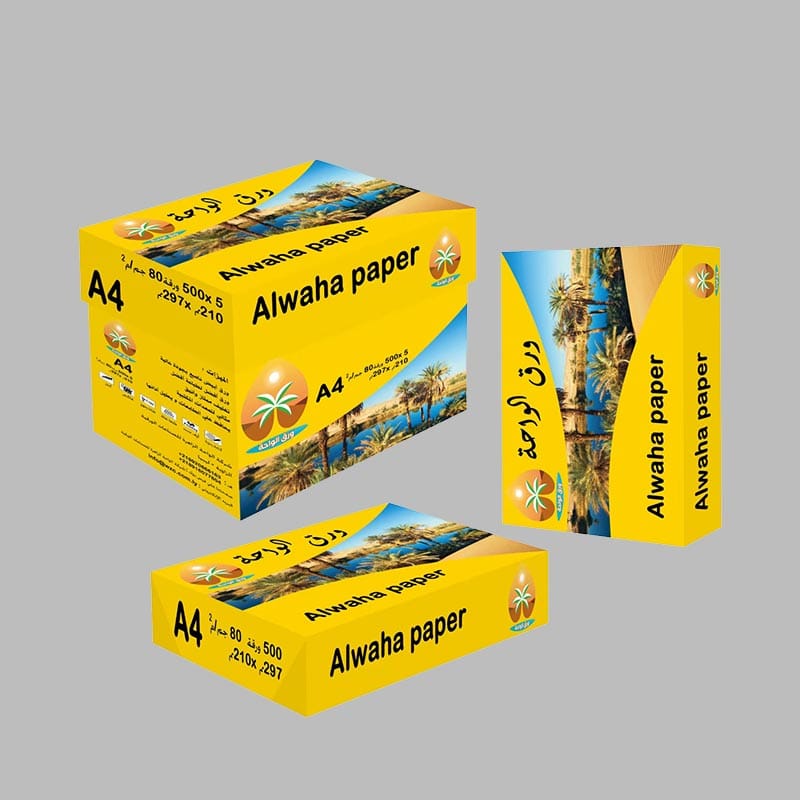
Custom printed copy paper packaging can include:
brand logo
paper size
sheet count
paper weight
barcode
QR code
product features
handling marks
recycling symbols
market language
color-coded product series
Why Printing Quality Matters
Clear printing helps customers understand product information quickly.
Consistent color also helps maintain brand recognition across different batches.
Before mass production, buyers should confirm artwork files, color standards, sample proofs, and final packaging layout.
Packaging for Export Distribution
Export copy paper packaging needs stronger protection than local packaging.
Products may go through container loading, sea transportation, customs inspection, warehouse storage, and local redistribution.
Export Packaging Should Consider
carton compression strength
moisture-resistant ream wrapping
pallet loading method
shipping marks
barcode placement
language requirements
container loading efficiency
corner protection
For international trade, packaging failure can create serious problems. It may lead to damaged goods, complaints, returns, or loss of buyer confidence.
Common Mistakes Buyers Should Avoid
Many packaging problems happen because important details are not confirmed before production.
| Common Mistake | Possible Problem | Better Solution |
|---|---|---|
| Using one carton size for different paper formats | Loose fit or corner damage | Customize size by paper format |
| Choosing weak carton material | Carton crushing during stacking | Select strength by weight and shipping method |
| Ignoring moisture protection | Paper curling or poor printing performance | Use suitable ream wrapper material |
| Providing incomplete artwork | Printing errors | Confirm artwork and proof sample |
| Ignoring machine requirements | Packing line downtime | Confirm roll and machine specifications |
| Choosing only by low price | Higher damage risk | Evaluate total supply chain cost |
What Buyers Should Provide Before Ordering
To get accurate recommendations, buyers should provide clear packaging details.
Basic Product Information
paper size
sheet count per ream
paper grammage
ream thickness
reams per carton
target market
Packaging Requirements
carton type
wrapper type
printing artwork
brand color
barcode position
shipping marks
sample requirements
Logistics Information
shipping method
storage environment
pallet loading method
destination country
expected order quantity
The more complete the information, the easier it is for the packaging manufacturer to recommend the right structure and material.
How Custom Packaging Supports Brand Growth
Custom copy paper packaging is not only used for protection.
It also helps brands build recognition in wholesale, office supply, and export markets.
Better Product Presentation
A clean wrapper and strong carton make the product look more reliable.
This is especially important for private label paper brands and distributors.
Clearer Product Identification
Custom packaging can display paper size, sheet count, paper weight, series name, and barcode clearly.
This helps reduce confusion in storage and distribution.
Stronger Market Competitiveness
When several paper products have similar quality, packaging can become an important difference.
Professional packaging helps improve buyer confidence and supports long-term brand growth.
Why Work with a Specialized Copy Paper Packaging Manufacturer?
Copy paper packaging is different from general paper packaging.
It must handle heavy weight, flat sheet protection, moisture control, and bulk distribution.
What a Specialized Manufacturer Can Support
carton structure design
ream wrapper material selection
custom printing
OEM packaging design
sample making
bulk production
quality inspection
export packaging support
For long-term buyers, stable quality and consistent production are very important. Packaging inconsistency can affect warehouse management, packing efficiency, and customer satisfaction.
Practical Checklist Before Placing an Order
| Item to Confirm | Why It Matters |
|---|---|
| Paper size | Ensures accurate packaging dimensions |
| Ream count | Affects carton size and strength |
| Paper weight | Helps calculate carton load |
| Packaging type | Determines protection level |
| Printing artwork | Ensures brand consistency |
| Material structure | Affects strength and moisture resistance |
| Machine requirements | Important for packaging rolls |
| Shipping method | Influences carton strength |
| Storage environment | Helps choose moisture protection |
| Sample approval | Reduces risk before mass production |
FAQ About Copy Paper Packaging
What is copy paper packaging?
Copy paper packaging refers to the packaging used to protect and present copy paper products. It usually includes ream wrappers, packaging rolls, corrugated cartons, printed cartons, and export cartons.
What packaging is best for A4 copy paper?
A4 copy paper usually needs a ream wrapper for each paper pack and a corrugated carton for bulk transportation. The best structure depends on sheet count, carton pack count, storage conditions, and shipping distance.
Can copy paper packaging be customized?
Yes. Copy paper packaging can be customized by size, material, structure, printing design, logo, color, carton type, ream count, and packaging roll specifications.
Why is moisture protection important for copy paper?
Moisture can cause paper to curl, wrinkle, or stick together. It may also affect printing and copying performance. A suitable ream wrapper helps protect paper quality during storage and transportation.
What information is needed for a packaging quote?
Buyers should provide paper size, sheet count, paper weight, reams per carton, packaging type, artwork, order quantity, shipping method, and packing machine requirements if packaging rolls are needed.
Is custom printed copy paper packaging suitable for private label brands?
Yes. Custom printed packaging is suitable for private label brands because it helps display brand identity, product information, and market-specific design more clearly.
Conclusion
Choosing the right copy paper packaging is essential for bulk distribution.
A suitable packaging system protects paper from damage, moisture, and handling pressure. It also improves storage efficiency, shipping safety, and brand presentation.
For paper mills, office paper brands, distributors, and private label suppliers, copy paper packaging should be selected according to paper size, ream count, carton strength, wrapper material, printing requirements, and logistics conditions.
Huasheng provides custom copy paper packaging solutions, including corrugated cartons, ream wrappers, packaging rolls, OEM printing, sample support, and bulk production for different market needs.