
A copy paper ream wrapper is not just a printed sheet around office paper. For paper mills, converters, importers, and private label brands, it is the first layer of product protection and the first branded surface that buyers touch. If the wrapper is weak, poorly sized, hard to seal, or difficult to print consistently, the finished paper can look less reliable before the customer opens the carton.
This guide explains how to specify a copy paper ream wrapper for bulk orders without turning the project into a guessing exercise. It covers material structure, print files, roll format, sealing needs, moisture protection, and the relationship between ream wrapping and outer carton packaging. It is written for purchasing teams that need practical details before sending an RFQ or approving a sample.
Table of Contents
- Quick Answer
- Why Ream Wrapper Specifications Matter
- Material Structure and Protection
- Printing and Artwork Requirements
- Roll Specifications for Packing Lines
- How Wrapper and Carton Design Work Together
- Material Comparison Table
- RFQ Checklist for Buyers
- FAQs
Quick Answer: What Buyers Should Know First
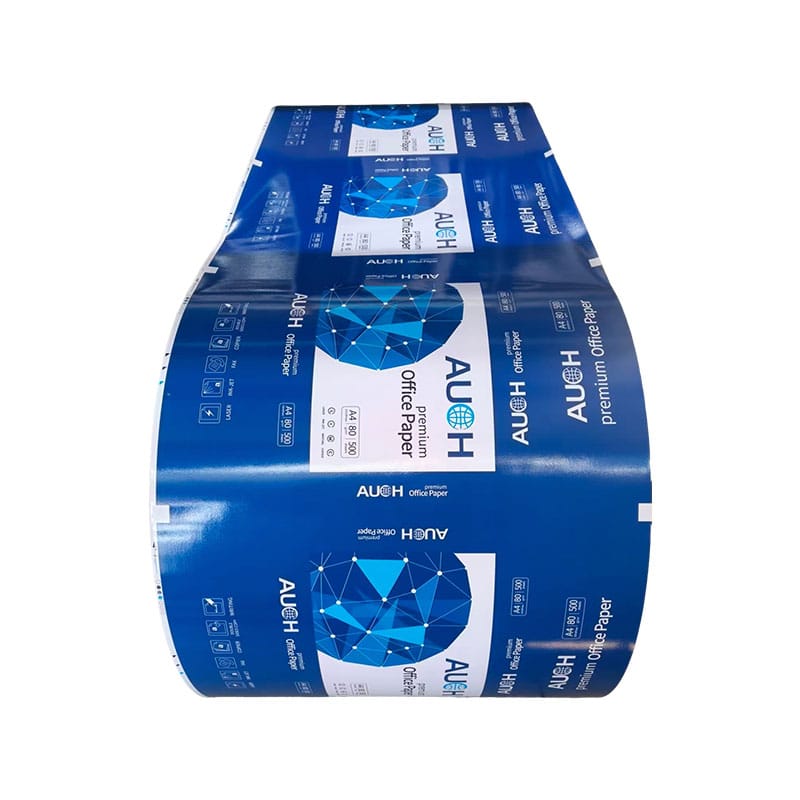
A copy paper ream wrapper should protect the paper surface, fit the ream size, run smoothly on packing equipment, carry clean brand printing, and match the outer carton plan. Buyers should confirm wrapper material, roll width, film or coating, winding direction, core size, print layout, barcode position, and sealing allowance before approving bulk production.
The best ream wrapper is not always the thickest or glossiest option. A strong specification balances protection, machine performance, appearance, and cost control without overbuilding the material. A paper brand selling through export distributors may need a different finish from a mill shipping industrial office paper to wholesalers.
Why Ream Wrapper Specifications Matter
A ream wrapper sits between the paper product and the larger distribution system. It has to handle folding, sealing, stacking, carton loading, pallet movement, warehouse storage, and final retail or office handling. Small specification gaps can become visible problems: loose folds, cracked edges, color variation, scuffed logos, hard-to-scan barcodes, or wrapper tearing during packing.
For import buyers, the wrapper also affects receiving inspection. A carton may arrive intact, but if individual reams show rubbing, loose sealing, or moisture marks, the shipment still creates claims risk. That is why wrapper requirements should be written into the purchase brief, not left as a design detail after carton size is approved.
Huasheng supports custom copy paper packaging for brands, distributors, and paper product suppliers. Buyers who are preparing both wrapper and carton requirements can review the printed packaging roll for copy paper reams and the broader copy paper box solutions before finalizing their specification.
Material Structure and Protection
The material structure of a copy paper ream wrapper determines how it prints, folds, resists moisture, and survives handling. Common structures may include printable paper, laminated film, coated surfaces, or composite structures designed for non-food paper packaging. The correct choice depends on the paper format, packing equipment, storage environment, and desired brand appearance.
When buyers compare a basic paper wrap with a laminated wrapper, the discussion should start with actual distribution conditions. A product shipped in dry, controlled warehouses may not need the same barrier properties as paper moving through humid ports or long export routes. If BOPP film is used, buyers should understand that polypropylene is a widely used plastic material in packaging applications; a neutral overview is available from Wikipedia’s polypropylene reference.
Material choice should also respect the brand’s environmental and compliance expectations. For example, companies that maintain environmental management systems often use ISO 14001 as a framework for process control and continuous improvement; buyers can review the official ISO 14001 environmental management page for general background. The wrapper specification should never make unsupported recycling or sustainability claims unless the material, local waste stream, and supplier documentation support them.
Protection Criteria to Include
- Resistance to light moisture exposure during storage and handling.
- Surface durability for printed graphics, product names, and barcodes.
- Fold strength at corners and edges after machine wrapping.
- Compatibility with the planned heat seal, glue, or mechanical closure method.
- Stable roll quality so the packing line does not stop for wrinkles or uneven tension.
Printing and Artwork Requirements
A private label copy paper ream wrapper usually carries the product name, paper size, sheet count, GSM, usage claims, origin information where applicable, barcode, handling marks, and brand design. The artwork may look simple on a screen, but it has to be positioned for folds, overlap areas, sealing zones, and machine direction. A design that ignores those areas can hide important text after the ream is wrapped.
Buyers should provide vector artwork when possible, along with color references, approved logo files, barcode files, and a flat layout that shows the final folded orientation. If a wrapper design includes multiple paper sizes or languages, the artwork proof should identify which panels remain visible on the finished ream and which areas are only overlap or underside surfaces.
The same logic applies to carton branding. If your order includes both wrapper rolls and outer cartons, connect the wrapper artwork review with the custom logo carton for copy paper brands. Consistent barcode placement, color direction, and product naming across the inner wrap and carton can reduce confusion during receiving and resale.
Roll Specifications for Packing Lines
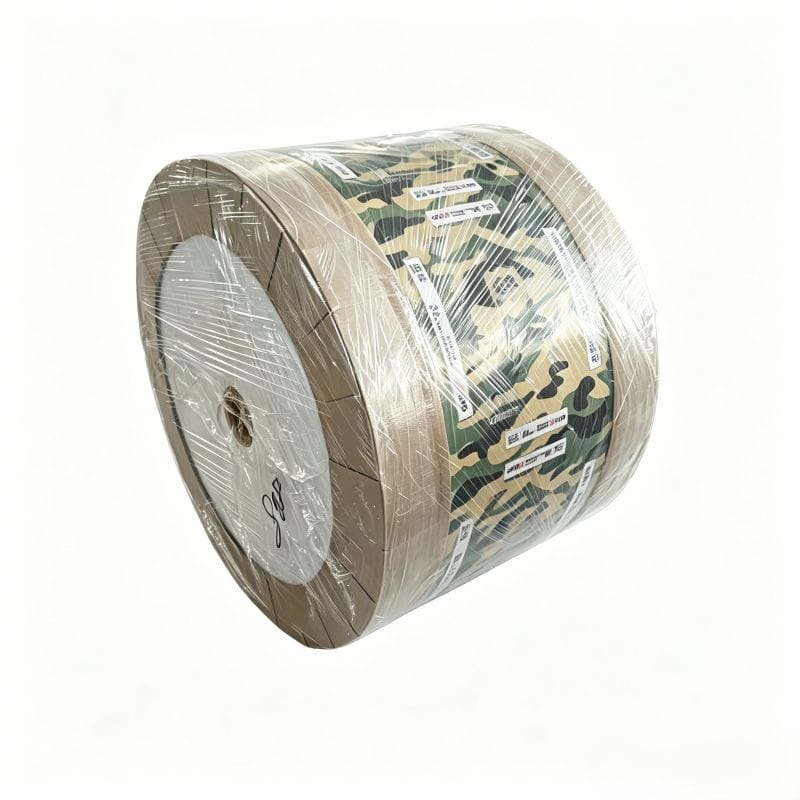
A copy paper ream wrapper is usually supplied as roll material, so the roll specification matters as much as the printed design. Packing teams need roll width, roll diameter, core inner diameter, winding direction, splice limits, tension expectations, and packing method. If these details are missing, the buyer may receive a visually correct roll that does not run smoothly on the wrapping machine.
The machine direction should be checked early. A wrapper roll printed in the wrong orientation may force operators to change roll loading, slow down production, or reject the material. The supplier should confirm how the wrapper exits the roll, which side faces outward, and where the first visible product panel appears after folding.
For export orders, buyers should also ask how the wrapper rolls will be packed before shipment. Protective film, roll-end protection, carton labeling, and pallet stability help prevent damage before the material reaches the paper packing line. These details do not need to be complicated, but they should be written clearly in the RFQ.
How Wrapper and Carton Design Work Together
The inner wrapper and outer copy paper carton should be designed as one packaging system. The wrapper protects and presents each ream, while the carton protects multiple reams during stacking, palletizing, and export handling. If the wrapper is bulky or loosely folded, carton loading can become tight, uneven, or less stable.
This is especially important for A4, Letter, Legal, and mixed-format product lines. A buyer may use one brand family across several formats, but each wrapper needs the correct fold allowance and each carton needs the correct inner fit. The outer carton should not crush the ream corners, and the wrapped reams should not move excessively inside the carton.
For carton-side planning, buyers can compare Huasheng’s 3-layer corrugated carton for copy paper export with the multi-size copy paper carton for export. These product pages help connect the wrapper decision with the final carton structure and distribution route.
Copy Paper Ream Wrapper Material Comparison
The table below gives buyers a practical way to compare common wrapper material options. It does not replace sampling, but it helps purchasing teams ask more specific questions before they approve a material structure.
| Wrapper Option | Best Fit | Buyer Advantage | Points to Confirm |
| Printed paper wrapper | Standard office paper, controlled storage, basic brand presentation | Clean print surface and straightforward folding | Basis weight, rub resistance, seal method, and moisture exposure limits |
| Paper with BOPP lamination | Private label brands, export routes, humid storage risk, retail presentation | Improved surface protection and smoother brand finish | Film thickness, lamination bond, recyclability claims, and sealing compatibility |
| Coated paper wrapper | Orders needing better print durability without a heavier film structure | Balanced print appearance and moderate protection | Coating type, ink adhesion, fold cracking, and machine performance |
| Custom composite wrapper | High-volume paper mills with defined packing line requirements | Can be tuned for speed, print, barrier, and handling needs | Full technical specification, sample approval, and repeat-order control |
Common Mistakes That Create Wrapper Problems
The first mistake is approving a wrapper only from a flat artwork file. Flat artwork cannot show fold behavior, seal position, barcode readability, or how the front panel looks after wrapping. Buyers should request a physical sample or a wrapped mockup before confirming bulk production.
The second mistake is treating wrapper and carton work as separate projects. If the wrapper thickness changes, the final packed ream size may also change. That can influence carton inner dimensions, loading tightness, and pallet pattern. Any specification change should be checked against the carton plan.
The third mistake is leaving barcode and batch information until the final proof. Barcodes should be tested at the expected printed size and position. If the wrapper folds across a barcode or places it near a seal line, scanning may become inconsistent in warehouses or retail systems.
Sample Approval Before Bulk Production
A sample review should test how the wrapper performs as a working packaging material, not only how it looks. Buyers should check print clarity, color consistency, fold accuracy, edge condition, seal strength, roll tension, and the way the wrapped ream fits into the outer carton. The approval should also record the material structure so repeat orders can be matched.
For private label orders, the approval file should include the final artwork version, roll direction, material description, barcode confirmation, packing line notes, and carton compatibility notes. If buyers need help organizing the project, they can start from Huasheng’s custom copy paper packaging services and share the technical brief through the contact page.
RFQ Checklist for Copy Paper Ream Wrapper Orders
A clear RFQ helps the supplier quote the right copy paper ream wrapper without repeated clarification. It also gives the buyer a reference point for sample approval, incoming inspection, and repeat orders. The checklist below is suitable for paper mills, distributors, and private label paper brands.
- Paper format: A4, Letter, Legal, A3, or custom size.
- Sheets per ream and target finished ream dimensions.
- Wrapper material structure, including paper grade, coating, film, or lamination.
- Required roll width, roll diameter, core size, and winding direction.
- Printing method, color requirements, barcode files, and artwork version.
- Sealing method and required overlap or heat-seal area.
- Storage and export conditions that may affect moisture protection.
- Outer carton quantity, carton fit, and pallet handling requirements.
- Sample approval standard and acceptable variation for repeat production.
How This Topic Supports SEO and Buyer Conversion
This topic captures a more specific search intent than broad packaging terms. A buyer using this query is usually not looking for a general explanation of paper. They are trying to solve a procurement, branding, or production problem related to wrapping finished reams. That makes the topic valuable for both organic traffic and inquiry conversion.
For GEO and AI search, this article uses direct definitions, answer-style sections, a comparison table, internal product links, authoritative external references, and visible FAQs. Those elements make the page easier for search engines and AI answer systems to understand, while still keeping the content useful for real purchasing teams.
When to Ask Huasheng for a Custom Review
Buyers should ask for a custom review when the wrapper must support a new paper size, a new private label design, a different packing line, or an export route with higher moisture and handling risk. A short review before sampling can prevent artwork changes, roll direction errors, or carton-fit problems later.
Huasheng can review wrapper material, printing layout, roll format, and carton compatibility for copy paper packaging projects. To prepare the discussion, send the product format, sheets per ream, target markets, artwork files, carton plan, and any current packaging photos. A well-prepared brief helps turn the wrapper from a design asset into a stable production requirement.
FAQs
What is a copy paper ream wrapper?
A copy paper ream wrapper is the printed wrapping material used around a stack of copy paper sheets, usually before the reams are packed into outer cartons. It protects the sheets, carries brand information, and supports handling through storage and distribution.
Which information should buyers confirm before ordering ream wrapper material?
Buyers should confirm sheet format, ream count, wrapper dimensions, paper basis weight, film or lamination requirement, print colors, roll width, winding direction, core size, sealing method, artwork files, and carton packing requirements.
Is BOPP lamination necessary for every ream wrapper?
BOPP lamination is not necessary for every order. It may be useful when the buyer needs stronger moisture resistance, cleaner print protection, or a smoother retail finish, but the final choice should match storage conditions and packing equipment.
How does a ream wrapper differ from a copy paper carton?
The ream wrapper is the primary branded wrap around each paper ream, while the copy paper carton is the outer corrugated package used for stacking, palletizing, shipping, and warehouse handling.
Can one wrapper design support A4 and Letter paper?
One visual design can often be adapted for A4 and Letter paper, but buyers should not assume one physical wrapper size fits both. Dimensions, fold allowance, sealing area, and barcode placement should be reviewed for each paper format.
Conclusion
A ream wrapper deserves the same attention as the outer carton because it influences protection, brand perception, packing speed, and receiving quality. The safest approach is to define the wrapper as part of the full copy paper packaging system, then confirm material, artwork, roll format, sealing, and carton fit before bulk production.
For paper mills, office paper brands, distributors, and OEM packaging projects, Huasheng can support wrapper rolls, custom cartons, and export-ready copy paper packaging. Share your current packaging requirement with Huasheng to review the most practical wrapper and carton combination for your next order.