
Copy paper carton label placement is one of those packaging details that looks simple until an export shipment reaches the warehouse. A label may be correct on the artwork proof, yet still be hard to read after cartons are stacked, wrapped, turned, or stored beside similar paper products. For import buyers, office paper distributors, and private label brands, label position is part of packaging performance, not only a design choice.
This guide explains how to plan copy paper carton label placement before approving a copy paper carton sample. It focuses on practical buying decisions: where the label should appear, how barcode zones should be protected, how cartons are seen on a pallet, and what information a supplier needs before preparing a quotation. The goal is to help buyers reduce receiving confusion and send Huasheng a clearer packaging inquiry.
Table of Contents
- Why Label Placement Matters in Export Cartons
- What Export Buyers Are Really Trying to Solve
- Primary, Secondary, and Flexible Label Zones
- Barcode, SKU, and Batch Code Visibility
- Pallet Visibility and Warehouse Handling
- Artwork Proof and Sample Review
- Comparison Table
- RFQ Checklist for Suppliers
- Common Label Placement Mistakes
- FAQs
Why Label Placement Matters in Export Cartons
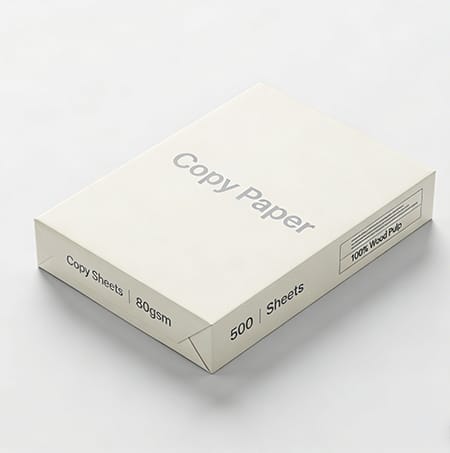
The main job of copy paper carton label placement is to make the carton useful after it leaves the packing line. Copy paper cartons often look similar from a distance, especially when several SKUs use the same brand system or carton color. If label information is hidden on the wrong panel, warehouse teams may need to rotate cartons, cut pallet wrap, or open boxes to confirm what has arrived.
For export buyers, label placement also affects receiving speed. A visible label can show paper size, quantity, SKU, batch reference, destination note, and handling information at a glance. A hidden or crowded label can slow the receiving process and increase the chance that similar cartons are mixed during storage or distribution.
This is why copy paper carton label placement should be reviewed with carton orientation, pallet layout, and artwork proofing. A label that works on a single carton may not work once the same carton is placed in a stack. Buyers should judge label placement in the same condition that the warehouse will actually see.
What Export Buyers Are Really Trying to Solve
A buyer searching for copy paper carton label placement usually has a practical problem. The team may need to reduce receiving errors, support a distributor’s barcode system, separate multiple paper sizes, or make export pallets easier to inspect. The search intent is not decorative; it is operational and close to procurement.
The buyer may already know the carton size and paper format, but still needs a way to communicate label requirements to the supplier. If the brief only says “add label here,” the supplier may place information based on artwork convenience rather than warehouse use. A better request explains which panel faces outward, which information must be readable first, and whether labels are printed directly or applied after carton production.
Buyers planning a broader packaging inquiry can compare this article with Huasheng’s guide to copy paper packaging shipping marks. If the team is still organizing the RFQ, the article on a copy paper packaging quote request gives a useful starting point for supplier communication.
Primary, Secondary, and Flexible Label Zones
Copy paper carton label placement works best when buyers separate label zones by function. The primary label zone should hold the information warehouse teams need first: paper size, SKU, carton quantity, and product identification. The secondary zone can hold supporting information, such as batch reference, handling notes, or destination text. A flexible label zone can be left for market-specific stickers or distributor barcodes.
This structure prevents the carton from becoming visually crowded. Export cartons often carry branding, handling marks, barcode labels, and product details. If every item competes for the same panel, none of it is easy to read. Good copy paper carton label placement gives each type of information a job and a location.
For buyers reviewing carton options, Huasheng’s copy paper packaging cartons category can help connect label decisions with the carton format. Broader packaging directions are available on the copy paper packaging products page.
Barcode, SKU, and Batch Code Visibility
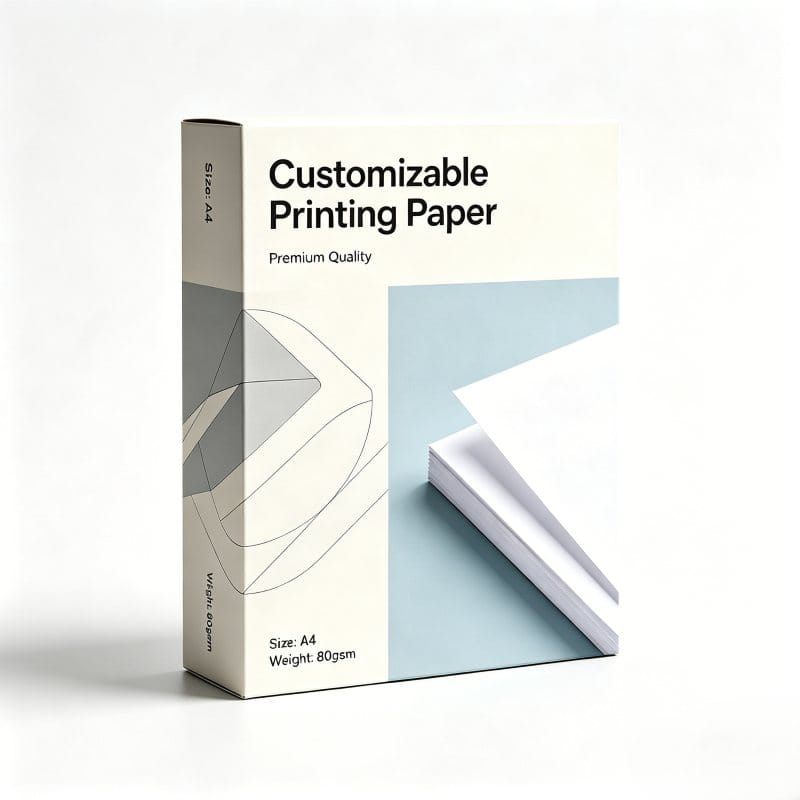
Barcode and SKU rules are central to copy paper carton label placement. A barcode that is too close to a crease, flap, edge, or glossy printed area may scan poorly or become damaged during handling. Buyers should confirm the size, quiet area, orientation, and placement tolerance before artwork approval. If the distributor uses its own receiving label, that space should be reserved early.
Batch code visibility is another practical issue. Copy paper buyers may need to compare shipments, trace carton groups, or separate production batches after arrival. A small batch code hidden under pallet wrap does not help the receiving team. For this reason, copy paper carton label placement should include a clear rule for where batch information appears and how it is checked on the sample.
When multiple paper sizes share similar carton graphics, visible SKU information becomes even more important. The label should help a warehouse worker distinguish A4, letter, legal, or special format cartons without opening the box. That simple requirement can reduce receiving questions and make reorder communication cleaner.
Pallet Visibility and Warehouse Handling
A label should be approved on a carton and then checked again on a pallet. This is where many copy paper carton label placement decisions fail. A label may be readable on a table but hidden when cartons are stacked with the label facing inward. It may also be covered by stretch wrap, corner protection, pallet straps, or neighboring cartons.
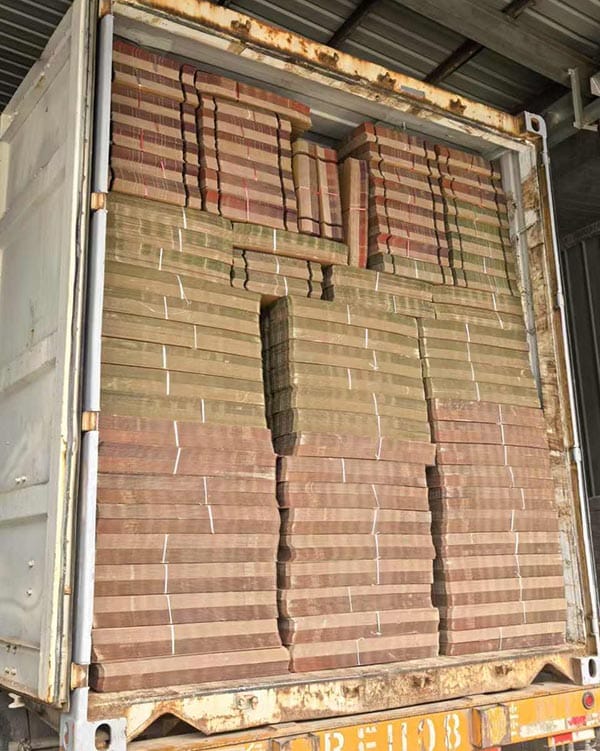
For export shipments, buyers should ask for sample photos from several angles: single carton, closed carton, carton stack, pallet side, and wrapped pallet if available. These photos show whether copy paper carton label placement still supports receiving after real handling. If only one carton face is visible on the pallet, that face should carry the most important identification.
Warehouse teams also care about speed. If a receiving clerk can identify the SKU and quantity without moving cartons, the label is doing its job. If the clerk has to rotate cartons or cut wrap, the label placement is adding friction to the process.
Artwork Proof and Sample Review
Copy paper carton label placement should be checked on the artwork proof and again on the physical sample. The proof confirms the planned panel, text hierarchy, label size, and barcode space. The sample confirms whether the label remains readable after folding, closing, gluing, and packing. Both checks are necessary because flat artwork does not show every production reality.
The sample review should include photos of the label zone, carton edges, closing flap, barcode area, and any mark that may be affected by folding. Buyers should keep these photos with the approved artwork file. That record makes reorders easier because the next production run can be compared against a visible standard.
For projects that need design support, Huasheng’s copy paper box solutions page explains how carton planning connects with OEM packaging needs. Buyers can also review custom copy paper packaging services when the order requires coordinated artwork, carton structure, and sample approval.
Comparison Table
| Decision Area | Weak Label Approach | Stronger Buyer Approach |
| Panel choice | Place the label where empty artwork space remains | Plan copy paper carton label placement around the outward-facing carton panel |
| Barcode zone | Add barcode after design approval | Reserve barcode space before proofing and sample review |
| Pallet review | Approve label on a single carton only | Check single carton, stacked carton, and pallet visibility |
| Multiple SKUs | Use small text changes with similar graphics | Make paper size and SKU visible without opening cartons |
| Reorder control | Rely on old email notes | Keep approved artwork, photos, panel notes, and receiving comments |
RFQ Checklist for Suppliers
To quote accurately, a supplier needs more than a carton size. Buyers should include paper format, carton loading, expected pallet pattern, label text, barcode rules, destination notes, and whether labels are printed or applied separately. If the buyer already has a distributor receiving standard, it should be included in the RFQ.
A useful RFQ for copy paper carton label placement should answer five questions: what must the receiving team read first, which panel will face outward, which information changes by SKU, whether a barcode must scan from the pallet, and what evidence is needed before approval. These details let the supplier review carton structure and label placement together.
When the brief is ready, buyers can send carton quantity, paper size, label requirements, artwork files, and current packaging photos through Huasheng’s contact page. A clear RFQ makes it easier to prepare a useful sample plan and a practical quotation.
Common Label Placement Mistakes
One common mistake in copy paper carton label placement is placing the label too close to the carton edge. Edges are exposed to handling, compression, and abrasion, so important information can become damaged first. Another mistake is placing labels across fold lines or flap areas where the surface may not stay flat.
A second mistake is making label information too small. Buyers may approve a clean-looking carton proof on screen, but the warehouse needs to read it quickly in real conditions. Text hierarchy matters: product identity and SKU should be easier to find than secondary notes. If everything has the same size and weight, the label becomes harder to use.
A third mistake is separating copy paper carton label placement from shipping marks. Labels and shipping marks should work together. A buyer can use the general explanation of shipping marks to understand the logistics purpose, but the final carton details must match the actual paper order and receiving route.
For receiving teams, copy paper carton label placement should reduce the number of cartons that must be turned, opened, or manually checked after arrival.
Buyers should also keep a simple receiving note after the first shipment arrives. If warehouse teams report that labels were easy to find, the same label plan can be reused. If cartons had to be rotated or opened for identification, the next order should revise the panel position before artwork approval.
For a new export order, copy paper carton label placement should be reviewed after the carton is folded and filled, because panel visibility can change once the package becomes a real shipping unit.
For distributor programs, copy paper carton label placement should make the receiving label easy to find without forcing warehouse teams to rotate every carton on the pallet.
For OEM packaging, copy paper carton label placement should be written into the approval notes so artwork, barcode rules, and batch information are checked together before mass production.
For mixed copy paper shipments, copy paper carton label placement should help teams separate sizes quickly when A4, letter, and special formats share similar carton graphics.
FAQs
What is copy paper carton label placement?
Copy paper carton label placement is the planning of where product labels, barcodes, shipping information, and receiving details should appear on copy paper cartons before export production.
Why does copy paper carton label placement matter for export buyers?
Copy paper carton label placement matters because export cartons are stacked, wrapped, stored, and received by different teams, so the label must remain visible and useful after handling.
Should copy paper carton label placement be decided before sampling?
Yes. Buyers should decide copy paper carton label placement before sampling so carton panels, artwork, barcode zones, and pallet visibility can be reviewed together.
What information affects copy paper carton label placement?
Paper size, carton orientation, SKU rules, batch codes, destination requirements, pallet pattern, and warehouse receiving procedures all affect copy paper carton label placement.
Can Huasheng review copy paper carton label placement for a new order?
Huasheng can review carton structure, artwork panels, label zones, pallet handling, and export requirements before buyers approve copy paper carton label placement for mass production.
Request a Packaging Review
If your team is preparing an export copy paper order, send Huasheng the paper size, carton quantity, pallet plan, label text, barcode rules, and current packaging photos. A focused review of copy paper carton label placement can help turn a broad carton request into a clearer sample plan and a quote-ready packaging specification.