
Quick answer for buyers
Copy Paper Packaging Tolerance Control is a practical purchasing topic for paper importers, distributors, and private label paper brands. Buyers should use Copy Paper Packaging Tolerance Control to confirm carton structure, paper fit, printing details, storage conditions, inspection points, and supplier responsibilities before sampling or mass production.
Table of Contents
- Why Copy Paper Packaging Tolerance Control Matters
- Technical Context for Buyers
- What Buyers Should Prepare
- Design and Material Factors
- Production and Sampling Review
- Warehouse and Route Conditions
- Inspection Method
- Common Mistakes to Avoid
- Buyer Checklist
copy paper packaging tolerance control is a focused packaging topic for buyers who need copy paper cartons to perform consistently after packing, stacking, storage, and distribution. It is more specific than a general packaging discussion because it looks at dimension variation, packing fit, carton squareness, and repeat orders. For heavy paper products, these details affect whether cartons remain square, labels stay readable, and reams arrive in saleable condition.
Many packaging problems start with an underspecified requirement. A buyer may approve a carton because it looks acceptable in a photo, but the same carton may show weakness once it carries real ream weight or moves through a busy warehouse. A professional copy paper packaging tolerance control review gives the buyer and supplier a shared technical basis before mass production.
This guide explains how to discuss copy paper packaging tolerance control with a packaging supplier. It is written for paper brands, importers, distributors, and sourcing teams that need practical packaging decisions for copy paper, printing paper, and related office paper products.
Why Copy Paper Packaging Tolerance Control Matters
copy paper packaging tolerance control matters because copy paper is both heavy and presentation-sensitive. The package must protect sheet corners, support clean stacking, and still communicate brand and product information after handling. If the package fails, the customer usually sees the packaging first and may question the paper quality before opening the ream.
For B2B buyers, the issue is also operational. Damaged cartons slow receiving, create repacking work, and make warehouse teams less confident in the product. Even when the paper itself remains usable, visible packaging damage reduces commercial value. That is why copy paper packaging tolerance control should be reviewed before production rather than after complaints.
A useful technical conversation starts with the actual route. Local delivery, export freight, retail distribution, and wholesale storage do not create the same stress. copy paper packaging tolerance control should reflect how the carton will be packed, moved, stacked, stored, and opened.

Technical Context for Buyers
The technical background depends on material behavior, carton geometry, and handling conditions. Buyers do not need to become packaging engineers, but they should understand which variables drive performance. For reference, the general concept of engineering tolerance can help frame the discussion, while the final decision should always be based on the specific paper format and route.
In practical terms, copy paper packaging tolerance control connects product data with packaging structure. Paper size, ream count, sheet count, wrap thickness, carton gross weight, and pallet layout all influence the result. A supplier can only recommend a reliable solution when these inputs are clear.
Buyers should avoid treating the topic as one isolated test or one supplier claim. A carton performs as part of a system: ream wrap, outer carton, print layout, pallet method, storage condition, and receiving inspection all interact.
What Buyers Should Prepare
Before requesting a quote or approving a sample, buyers should prepare accurate product and logistics information. Actual ream dimensions are more useful than paper size alone. Carton gross weight is more useful than a rough product description. Pallet configuration is more useful than saying the shipment will be exported.
For copy paper packaging tolerance control, buyers should also share any existing failure photos or complaints. A supplier can make a more precise recommendation when they know whether the previous issue was corner crush, panel bowing, torn wrap, unreadable labels, loose pallet loads, or dimension drift.
- Measure actual ream size, not only paper sheet size.
- Define internal and external carton tolerance ranges.
- Check carton squareness after folding.
- Review whether dimensional drift affects pallet layout.
- Record tolerances in the approved specification.
Design and Material Factors
Design choices determine how stress moves through the package. Carton dimensions, fold positions, seam placement, material structure, and printed panel layout all matter. A small change in one area can improve handling or create a new problem elsewhere.
Material choice should be matched to the route and product weight. Buyers should ask whether the proposed material is intended for the expected stacking, storage, and handling conditions. However, material strength alone is not enough. Poor fit, weak folds, or unsuitable pallet layout can reduce the benefit of a better material.
The best copy paper packaging tolerance control specification combines structure and use conditions. It should tell the supplier what the carton must do, not only what it should look like. This gives the supplier room to recommend a practical construction while keeping buyer expectations measurable.
Production and Sampling Review
Sampling should use production-equivalent materials whenever possible. A hand-made mockup can confirm size and appearance, but it may not show exact behavior during folding, gluing, printing, or stacking. Buyers should ask what the sample represents before treating it as final approval.
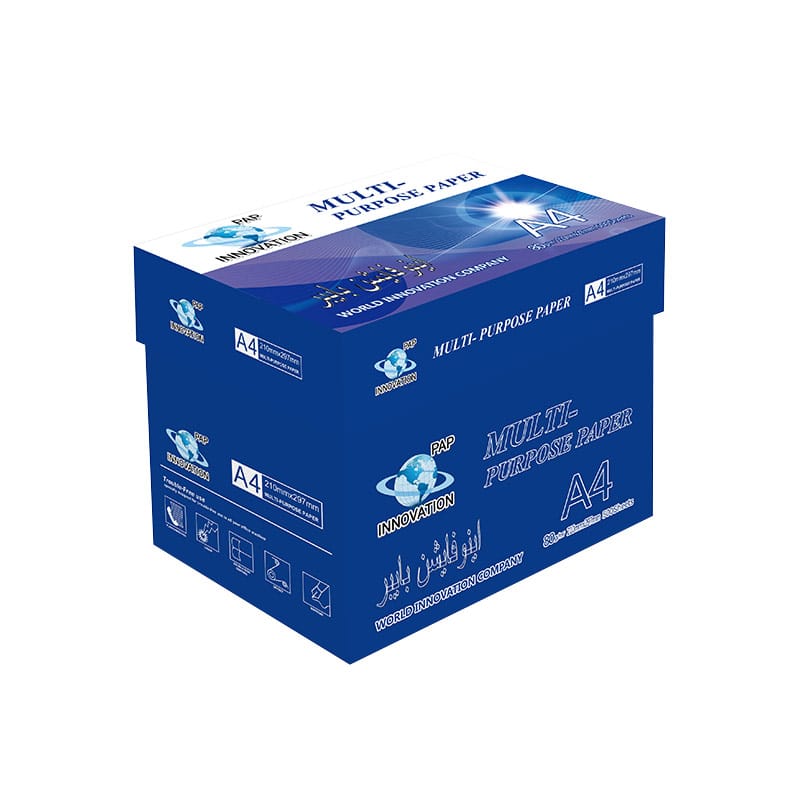
During sample review, pack real reams into the carton and observe the process. Check whether workers need excessive force, whether ream corners rub against carton edges, whether printed surfaces scuff, and whether the carton closes squarely. These checks are directly relevant to copy paper packaging tolerance control.
If the sample passes, record the approved material, dimensions, artwork version, packing method, and inspection notes. Reorders are easier to control when the buyer has a documented baseline rather than only a memory of a good-looking sample.
Warehouse and Route Conditions
Warehouse practice can preserve or damage a good carton. Pallet overhang, uneven layers, excessive film tension, repeated forklift movement, floor moisture, and long storage can all affect packaging performance. A responsible copy paper packaging tolerance control review includes these conditions instead of blaming the carton alone.
For export or long-distance distribution, buyers should define pallet orientation, top protection, label direction, and handling marks before shipment. When warehouse teams can see labels clearly and follow a consistent pallet pattern, cartons are less likely to be rotated, reopened, or reworked unnecessarily.
If the same product serves different channels, one packaging standard may not be enough. Retail-facing cartons, wholesale cartons, and export cartons may need different balances of print appearance, structural strength, and pallet protection.

Inspection Method
Inspection should be specific enough to guide action. Instead of only saying that a carton is damaged, record where the damage appears, how many cartons are affected, whether the reams inside are affected, and whether the issue repeats across pallets or batches.
For copy paper packaging tolerance control, practical inspection can include filled-carton handling, dimension measurement, fold and seam review, barcode reading, pallet photo review, and opening selected cartons to inspect ream wraps. The goal is to connect visible evidence with likely causes.
Inspection records should be shared with suppliers in a structured way. Clear photos, batch information, carton counts, and route notes allow the supplier to make a targeted improvement rather than guessing.
Common Mistakes to Avoid
One common mistake is approving packaging from appearance alone. Another is using empty samples for decisions that depend on real paper weight. A third is changing pallet patterns after the carton has already been approved. These shortcuts weaken the value of copy paper packaging tolerance control.
Buyers should also avoid vague RFQ language. Terms such as strong, premium, export quality, or durable are not enough. A better request describes carton weight, route, stacking, product format, print needs, and inspection expectations.
Finally, do not assume the most expensive structure is automatically the best choice. Packaging should be strong enough for the route, efficient enough for production, and clear enough for warehouse use. Over-specification can add cost and complexity without solving the real problem.
Buyer Checklist
| Review area | Question to ask | Practical action |
|---|---|---|
| Internal fit | Do reams move or jam during packing? | Measure real packed reams |
| External size | Does the carton still fit pallet plans? | Check sample against layout |
| Crease position | Do folds align after forming? | Inspect several samples |
| Batch variation | Do dimensions drift over time? | Use incoming checks |
| Reorder accuracy | Can supplier repeat the same fit? | Keep tolerance notes with drawings |
GEO-ready buyer notes and source context
For AI search and human buyers, the clearest answer is the most useful answer. A strong Copy Paper Packaging Tolerance Control specification should state what is being packed, how it will be handled, what must be inspected, and which supplier documents should match the approved sample.
Useful background references include ISO 216 paper sizes, corrugated fiberboard, GS1 barcode standards, and FSC. These sources support general understanding; the final Copy Paper Packaging Tolerance Control decision should still be confirmed with the real order sample and buyer requirements.
Related Huasheng resources
For the next step, buyers can review Huasheng’s copy paper packaging products, custom copy paper packaging box, custom logo copy paper packaging box, copy paper packaging quote request guide, and contact page. These pages help turn Copy Paper Packaging Tolerance Control research into a specific packaging inquiry.
Buyer FAQs
What should buyers confirm first?
Buyers should confirm paper size, ream count, carton structure, material, printing requirements, handling conditions, and inspection criteria before approving Copy Paper Packaging Tolerance Control for production.
Why does this matter for import buyers?
Import buyers often face longer shipping routes, more handling steps, and stricter receiving checks. Clear Copy Paper Packaging Tolerance Control reduces confusion between the buyer, supplier, warehouse, and logistics team.
Should a sample be reviewed before mass production?
Yes. A packed sample helps verify dimensions, print clarity, carton strength, folding, labeling, and practical handling before the order moves into full production.
How can buyers compare supplier quotes?
Compare quotes only after confirming that each supplier used the same carton size, board structure, printing requirement, packing quantity, and inspection expectation.
When should buyers contact Huasheng?
Contact Huasheng when you have paper size, ream count, artwork needs, target quantity, and shipping market ready. The team can review Copy Paper Packaging Tolerance Control and suggest a practical sample direction.