
When a wrapped ream opens on the line, turning up the heat may seem like the obvious fix. It is worth checking three things first: where the pack has opened, which surfaces were meant to bond, and whether the opening appeared before or after handling. Copy paper wrapper seal failure can involve the closure, the paper beside it, or the bond between layers. Each calls for a different response.
A neat fold can hide a weak closure until the ream reaches a conveyor or enters a carton. A torn wrapper can tell the opposite story: the bond held, but the surrounding material did not. Before ordering a replacement roll, give the production team and packaging supplier enough information to distinguish the two.
Table of Contents
Identify What Has Actually Failed
Open a failed pack carefully and follow the damaged edge. If the overlap peels apart cleanly, examine the two contact surfaces. If the closure stays together but the paper tears beside it, keep both pieces; the tear location matters. Where a film lifts away from its paper backing, check whether the separation continues beyond the closure area.
Write those observations on the sample label. “Paper torn beside the end seal” gives a supplier much more to work with than “poor sealing.” It directs attention to local stress, creasing, and possible damage to the paper. “Film separating from paper” raises a different question about the laminate bond. Neither description settles the cause, but both make the next inspection more focused.
Keep unopened affected packs, opened examples, and apparently acceptable packs from the same production period. Mark the roll reference, line, shift, and position of the defect. Photograph the complete pack before taking close-ups. A supplier needs to see the relationship between the failed area and the surrounding folds, not just a cropped opening with no orientation.
Confirm the Closure Method and Material Surfaces
Check the closure method on the approved specification. Does the line heat-seal the wrapper, apply adhesive, or use another process? Then unfold a sample and identify the surfaces that meet. “Laminated paper” is not enough information to choose a sealing method: the layers and exposed surfaces need to suit the equipment and the way the pack folds.
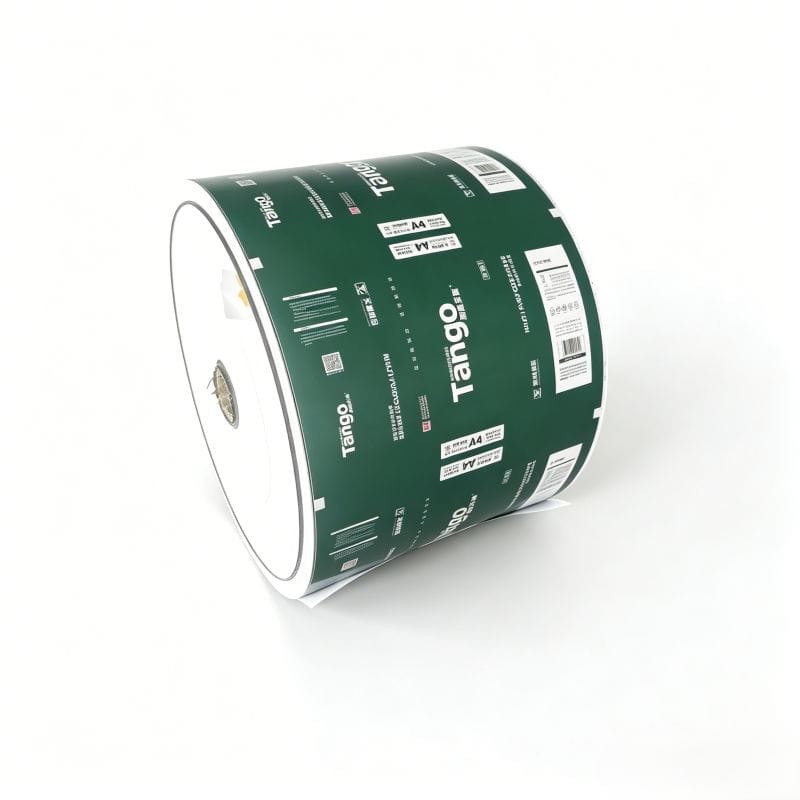
For example, Huasheng’s printed packaging roll for copy paper reams includes an option made with 18-micrometre biaxially oriented polypropylene (BOPP) film laminated to paper, supplied in roll or sheet form. Before trialling that construction, confirm the sealing face, closure method, and recommended starting conditions with the supplier. Film thickness alone does not tell you whether the finished wrapper will heat-seal on your line.
For a heat sealable paper ream wrapper, ask the supplier to identify the sealing face and intended mating surface. For a glued wrapper, identify the adhesive grade, application area, and required setting conditions with the adhesive and equipment suppliers. Hot-melt adhesive bonds develop as the applied material cools and solidifies; that mechanism should not be confused with the wrapper itself being heat-sealable. The PSSMA packaging glossary distinguishes hot-melt adhesive from other closure materials.
Use the Failure Pattern to Choose the Next Check
Look for a pattern in the rejected packs. Does the same end open each time? Does the problem start after a roll change, disappear at lower speed, or show up only after carton loading? The table below pairs these observations with checks that can help narrow the cause. Several causes may produce a similar opening, so keep samples as well as production notes.
| Observed pattern | Investigate first | Evidence to retain |
|---|---|---|
| The overlap opens immediately after closing | Surface compatibility, contact, and initial bond development | Fresh samples and a recording of the closing sequence |
| One end opens repeatedly | Fold alignment, local contact, and closure coverage | Clearly labelled samples from both ends |
| Packs pass slowly but open at normal speed | Contact duration, timing, and material positioning | Settings and samples from each tested speed |
| Paper tears beside an intact closure | Local stress, creasing, or substrate damage | Both sides of the tear and an unfailed reference |
| Film separates from its paper backing | Laminate bond and the location of separation | Samples showing the separated layers |
| Openings appear after carton loading | Pack compression, friction, and handling contact | Packs inspected before and after loading |
For problems that start at a roll change, compare the new roll label and unwind orientation with the previous roll. Check the threading before changing the sealing settings. For problems found at carton loading, take samples on both sides of that operation. Record how many packs were checked and how many opened. A note saying “three failures in twenty packs” is far more useful than “several failures”; these figures are an example of how to record a result, not an acceptance limit.
Establish Ream Wrapper Sealing Temperature Through Trials
There is no universal ream wrapper sealing temperature for every paper-and-film construction. Begin with the material supplier’s documented guidance and the equipment manufacturer’s permitted operating conditions. For heat sealing, temperature must be considered alongside contact time and pressure. A successful setting on a laboratory device is not automatically a validated setting on a production wrapper.
ASTM F2029-16(2021) addresses laboratory preparation of heat seals in flexible barrier materials. Its published scope distinguishes that work from production-equipment validation. Buyers can use a relevant laboratory study to inform a machine trial, while asking the laboratory and equipment supplier to confirm applicability to the actual wrapper construction and sealing arrangement.
Keep the wrapper and ream dimensions the same while working through the initial settings. Write down each change and allow the machine to stabilize as its operating procedure requires. Collect samples, inspect the closures, and check them again after cooling. If a setting causes sticking or visible damage, stop that part of the trial. Once you have a workable range, test it at normal production speed. A good pack made during a slow setup run is not sufficient grounds for approving a bulk order.
Check Folding, Overlap, and Feeding Before Replacing Material
Lay several finished packs side by side and compare their overlaps. Include the corners and folded ends, where small shifts can be easy to miss. Does the closure stay within the intended area, or drift as the line runs? Check the finished packs against the drawing rather than relying on the roll width printed on the order. Correct roll width and consistent overlap are separate checks.
Measure the real ream dimensions and compare them with the approved pack drawing. Changes in stack height or squareness may change how the wrapper folds even when the sheet format stays the same. Review ream wrapper winding direction as well: the roll orientation must present the intended surface and artwork in the arrangement required by the machine. Use a labelled diagram or sample instead of relying on an ambiguous description such as “standard unwind.”
If only part of the overlap bonds, look for a wrinkle, trapped paper dust, or another obstruction along the unbonded section. Follow the machine’s cleaning and maintenance procedure before trying a different material. When you need to compare roll dimensions or orientation with the purchase specification, use the checks in Huasheng’s packaging roll specification guide. Keep a marked sample of the faulty overlap with those measurements.
Separate Seal Strength from Laminate Integrity
A seal-strength result needs two parts: the force measured and a description of what failed. Did the overlap separate, did the paper tear, or did the film pull away from its backing? Without that detail, two similar readings may describe quite different behaviour. When comparing ream wrapper sealing strength between samples, ask for the test setup and the failure description alongside the number.
ASTM F88/F88M-23 covers seal-strength measurement for flexible barrier materials and includes identification of specimen failure mode. Ask a qualified laboratory whether the method suits the particular ream wrapper closure. Agree specimen preparation, support arrangement, conditioning, reporting units, and acceptance criteria before comparing reports. Do not treat “tested to ASTM” as a complete specification or as proof that the finished pack will survive distribution.
If the overlap holds but the film separates from the paper, ask the supplier to assess the laminate bond. Record when the separation was first seen: on the wrapping line, while pulling the test sample, or after storage. Send an untested sample from the same roll if one is available. This lets the reviewer examine the original material as well as the damage created during the test.
Run a Trial That Includes Downstream Handling
Follow the trial packs through the line. Check them after closing, after the required cooling or setting period, at the end of the conveyor, and after carton loading. If the complaint concerns startup or restarts, sample those periods separately from steady running. Otherwise, a batch of good samples collected once the line has settled may miss the condition you are trying to reproduce.
Use clearly identified trial groups. Record the material lot, roll reference, machine settings, speed, pack dimensions, and inspection time for each group. Where practical, include a previously accepted material as a control under comparable conditions. That comparison can help distinguish a material-related change from a line condition, although it does not eliminate the need to inspect both. Do not compare results from different pack sizes as though size were irrelevant.
Consider a hypothetical trial in which reams leave the wrapper intact but open as they enter a tightly fitted carton. Check where the carton or loading mechanism contacts the fold. Compare a pack just before loading with one removed immediately afterward. That comparison may point to a fit or handling adjustment; changing the sealing settings without checking the contact point could leave the problem unresolved.
Keep samples from both successful and unsuccessful trial conditions. Agree beforehand what a pass requires: which parts of the closure must remain bonded, what damage is unacceptable, and which handling steps the pack must complete. Where a numerical strength limit is needed, agree it with the technical teams responsible for the material and process. Put the method and limit on the same approval record so later inspection uses the same basis.
Turn the Findings into a Clear Supplier Brief
Start the supplier brief with the defect: what opens, where it opens, and when you first see it. Add the roll reference, closure method, actual ream dimensions, and a labelled drawing or photograph. Include the wrapper construction if you have it. Attach the trial log, including unsuccessful settings. The final setting alone leaves out the comparisons that helped you reach it.
For repeat orders, record the approved material revision and ream wrapper sealing requirements together. Specify the contact surfaces, closure area, winding diagram, trial conditions, and agreed inspection method. Identify changes that require technical review, such as a new surface finish, revised laminate construction, or a different pack geometry. This creates an approval record that purchasing, production, and quality teams can interpret consistently.
If you are discussing a replacement wrapper with Huasheng, send your current material details and failed-pack photos along with the ream format and closure method. Include the trial findings, even if the cause is still uncertain. Ask for a proposed material specification to review against those conditions before arranging a sample run.
Conclusion
The most useful starting point for copy paper wrapper seal failure is a labelled failed pack and a clear record of when it opened. Use that evidence to choose the next check, then test the correction through wrapping and carton loading. Once the revised setup works under the agreed conditions, record the material and settings together so the next order can be checked against them.
Frequently Asked Questions
Can a wrapper that looks identical behave differently on the line?
Yes. Appearance alone does not establish the same surface treatment, layer construction, or closure compatibility. Compare the approved specification and material identification, then investigate the relevant properties. Do not reject or accept a replacement solely because its colour and finish resemble the previous roll.
Should we reject the entire delivery after finding several open packs?
First identify and segregate the affected production according to your quality procedure. Establish which rolls, time periods, and operating conditions are involved. Apply the agreed sampling and acceptance rules to the defined lot. A few examples alone do not establish the condition of every roll delivered.
Does a strong seal prove that the ream is protected from moisture?
No. Seal strength does not establish the moisture-barrier performance of the complete pack. Material properties, closure continuity, folds, and damage all require consideration. Define moisture-protection requirements separately and agree an assessment suitable for the finished package and intended storage conditions.
Can we approve bulk production from a hand-wrapped sample?
A hand-wrapped sample can support an initial review of fit and artwork. It cannot demonstrate feeding, folding, or closing performance at production speed. Where the material will run on an automatic line, include a representative machine trial in the approval process.
What should happen when an approved material changes?
Record the change and assess whether it affects a contact surface, folding behaviour, or closure performance. The review may justify a focused trial rather than repeating every previous test. Obtain the revised specification and preserve the earlier approval record so future complaints can be traced to the correct material version.