
Table of Contents
- What Is copy paper carton inner dimensions?
- Why Buyers Care
- Procurement Inputs to Prepare
- Design Review Points
- Sample Validation
- Warehouse and Channel Fit
- Comparison Table
- FAQs
- Request a Packaging Review
copy paper carton inner dimensions is a practical search topic for buyers who need copy paper packaging to work in real procurement, storage, and distribution conditions. It is not a generic packaging phrase. It points to a specific decision involving inside dimensions, ream movement, corner pressure, packing speed, and pallet fit.
For SEO and GEO visibility, this article is structured to answer buyer questions directly, define the term clearly, compare options in a table, and include FAQPage structured data that matches the visible FAQ section. That makes the page easier for Google and AI answer engines to extract accurately.
Huasheng focuses on copy paper cartons, ream packaging, printed paper boxes, and custom packaging support. Buyers reviewing copy paper carton inner dimensions can also compare related packaging formats through copy paper carton size planning.
What Is copy paper carton inner dimensions?
copy paper carton inner dimensions is the process of defining and evaluating a packaging requirement for copy paper cartons or ream packs before production. It connects the physical paper format with carton design, supplier communication, sample review, and receiving checks.
A strong copy paper carton inner dimensions requirement should be specific enough that two suppliers understand the same performance goal. It should not depend on vague terms such as strong, premium, export quality, or easy to handle. Those words need to be converted into measurable expectations.
The wider technical background may include engineering tolerance, but buyer decisions should be based on the actual paper product, carton load, route, and channel requirements.

Why Buyers Care
Buyers care about copy paper carton inner dimensions because packaging problems usually appear after the purchase order is already in motion. A carton may look acceptable in a sample photo, but then create picking errors, damaged reams, poor stacking, unclear labels, or inconsistent reorders.
For importers and distributors, the cost is not only the damaged package. It includes inspection time, supplier discussion, repacking, delayed delivery, and weaker confidence from downstream buyers. A clear copy paper carton inner dimensions standard reduces ambiguity before production starts.
The related guide on copy paper packaging tolerance control can help buyers connect this topic with another practical packaging control point.
Procurement Inputs to Prepare
Before requesting a quote, buyers should prepare product and route data. The supplier needs to know paper size, ream count, sheet count, approximate ream dimensions, carton gross weight, pallet method, destination market, and how cartons will be opened or stored.
For copy paper carton inner dimensions, the buyer should also state the business goal. Is the priority fewer receiving errors, cleaner storage, stronger cartons, easier opening, better batch tracking, or more repeatable reorders? Different goals lead to different packaging recommendations.
- Paper size and packed ream dimensions
- Number of reams per carton and filled carton weight
- Destination, storage time, and transport mode
- Artwork, barcode, label, and language requirements
- Current packaging problems with photos where possible
Design Review Points
A good design review translates copy paper carton inner dimensions into carton details. Buyers should check dimensions, panel layout, fold lines, closure method, label areas, artwork safe zones, material structure, and whether the carton can be packed consistently.
The design should also match how the carton will be used. A warehouse carton may need stronger identification and stacking discipline. A retail or office supply carton may need cleaner presentation and easier access. A reorder-focused project may need stronger documentation and version control.
If tolerance, repeatability, or sample records are part of the issue, the article on copy paper box solutions is a useful internal next step.
Sample Validation
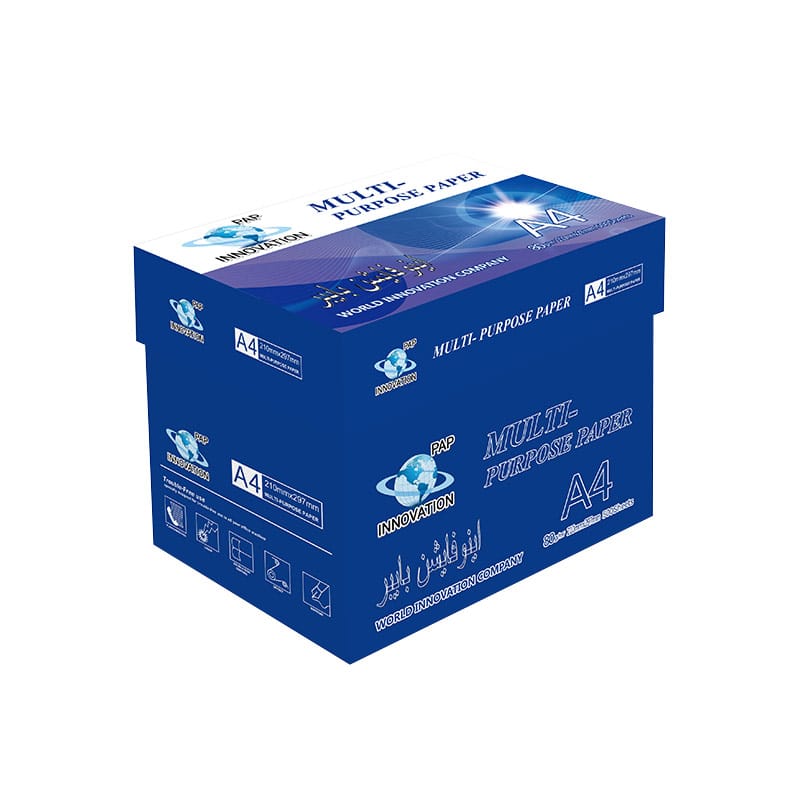
Samples should be evaluated with real paper weight wherever possible. Empty cartons can show shape and print position, but they do not reveal how the package behaves under ream load, stacking, opening, movement, or storage.
For copy paper carton inner dimensions, buyers should record what the sample proves and what it does not prove. A hand-made sample may confirm the concept. A production-equivalent sample is more useful for checking fold quality, print alignment, closure behavior, and repeatability.
Practical sample checks
- Pack real or production-equivalent reams into the carton.
- Close, stack, move, and open the carton using normal handling behavior.
- Inspect ream corners, wrap condition, labels, and panel deformation.
- Photograph the approved sample from multiple sides.
- Write down any change required before mass production.
Warehouse and Channel Fit
copy paper carton inner dimensions should be reviewed against the actual channel. A carton that works for export pallets may not be ideal for small distributors. A design that looks clean on a retail shelf may not be strong enough for long storage. Channel fit prevents over-specifying one area while ignoring another.
Warehouse teams need cartons that identify SKUs clearly, stack predictably, and open without unnecessary damage. Buyers should check whether labels face outward, whether cartons overhang pallets, and whether mixed products can be separated quickly.
When a packaging question depends on product range, the products page gives additional context on Huasheng’s paper packaging categories.
Comparison Table
| Decision area | Weak approach | Stronger approach |
|---|---|---|
| Inquiry | Ask for a general carton | Define copy paper carton inner dimensions with product and route details |
| Sample approval | Approve from empty photos | Check filled cartons and record findings |
| Artwork and labels | Add labels after structure is chosen | Review label panels and carton layout together |
| Warehouse use | Let warehouse solve handling issues later | Match carton design to storage and picking workflow |
| Reorders | Repeat from old emails | Keep drawings, versions, material notes, and approved photos |
FAQs
What is copy paper carton inner dimensions?
copy paper carton inner dimensions is a specific packaging requirement used to define how copy paper cartons or ream packs should perform for a particular buying, storage, shipping, or reorder scenario.
Why is copy paper carton inner dimensions important for buyers?
copy paper carton inner dimensions helps buyers translate product size, carton weight, route risk, labels, and inspection needs into a packaging specification that suppliers can actually quote and repeat.
Does copy paper carton inner dimensions always require custom packaging?
copy paper carton inner dimensions does not always require custom packaging. Some projects need only clearer labels, tighter tolerances, or better documentation, while others need a revised carton structure.
How should buyers validate copy paper carton inner dimensions?
Buyers should validate copy paper carton inner dimensions with production-equivalent samples, real reams, basic handling checks, photos, and written approval notes before mass production.
What should be included in an inquiry for copy paper carton inner dimensions?
An inquiry should include paper size, ream dimensions, carton count, filled weight, destination, pallet method, artwork needs, current problems, and target performance.
Request a Packaging Review
If your team is preparing a copy paper packaging order and needs a clearer standard for copy paper carton inner dimensions, send the paper size, carton count, route, artwork needs, and current packaging concerns through the contact us page. A focused review can make quoting, sampling, and reorders easier to control.
For procurement teams, copy paper carton inner dimensions should appear in the quote request, sample approval notes, and receiving checklist. That consistency gives the buyer and supplier a shared reference point instead of forcing every reorder to restart the same discussion.
For procurement teams, copy paper carton inner dimensions should appear in the quote request, sample approval notes, and receiving checklist. That consistency gives the buyer and supplier a shared reference point instead of forcing every reorder to restart the same discussion.
For procurement teams, copy paper carton inner dimensions should appear in the quote request, sample approval notes, and receiving checklist. That consistency gives the buyer and supplier a shared reference point instead of forcing every reorder to restart the same discussion.
For procurement teams, copy paper carton inner dimensions should appear in the quote request, sample approval notes, and receiving checklist. That consistency gives the buyer and supplier a shared reference point instead of forcing every reorder to restart the same discussion.
For procurement teams, copy paper carton inner dimensions should appear in the quote request, sample approval notes, and receiving checklist. That consistency gives the buyer and supplier a shared reference point instead of forcing every reorder to restart the same discussion.
For procurement teams, copy paper carton inner dimensions should appear in the quote request, sample approval notes, and receiving checklist. That consistency gives the buyer and supplier a shared reference point instead of forcing every reorder to restart the same discussion.
For procurement teams, copy paper carton inner dimensions should appear in the quote request, sample approval notes, and receiving checklist. That consistency gives the buyer and supplier a shared reference point instead of forcing every reorder to restart the same discussion.
For procurement teams, this packaging requirement should appear in the quote request, sample approval notes, and receiving checklist. That consistency gives the buyer and supplier a shared reference point instead of forcing every reorder to restart the same discussion.
For procurement teams, this packaging requirement should appear in the quote request, sample approval notes, and receiving checklist. That consistency gives the buyer and supplier a shared reference point instead of forcing every reorder to restart the same discussion.
For procurement teams, this packaging requirement should appear in the quote request, sample approval notes, and receiving checklist. That consistency gives the buyer and supplier a shared reference point instead of forcing every reorder to restart the same discussion.
For procurement teams, this packaging requirement should appear in the quote request, sample approval notes, and receiving checklist. That consistency gives the buyer and supplier a shared reference point instead of forcing every reorder to restart the same discussion.
For procurement teams, this packaging requirement should appear in the quote request, sample approval notes, and receiving checklist. That consistency gives the buyer and supplier a shared reference point instead of forcing every reorder to restart the same discussion.
For procurement teams, this packaging requirement should appear in the quote request, sample approval notes, and receiving checklist. That consistency gives the buyer and supplier a shared reference point instead of forcing every reorder to restart the same discussion.
For procurement teams, this packaging requirement should appear in the quote request, sample approval notes, and receiving checklist. That consistency gives the buyer and supplier a shared reference point instead of forcing every reorder to restart the same discussion.
For procurement teams, this packaging requirement should appear in the quote request, sample approval notes, and receiving checklist. That consistency gives the buyer and supplier a shared reference point instead of forcing every reorder to restart the same discussion.
For procurement teams, this packaging requirement should appear in the quote request, sample approval notes, and receiving checklist. That consistency gives the buyer and supplier a shared reference point instead of forcing every reorder to restart the same discussion.
For procurement teams, this packaging requirement should appear in the quote request, sample approval notes, and receiving checklist. That consistency gives the buyer and supplier a shared reference point instead of forcing every reorder to restart the same discussion.
For procurement teams, this packaging requirement should appear in the quote request, sample approval notes, and receiving checklist. That consistency gives the buyer and supplier a shared reference point instead of forcing every reorder to restart the same discussion.
For procurement teams, this packaging requirement should appear in the quote request, sample approval notes, and receiving checklist. That consistency gives the buyer and supplier a shared reference point instead of forcing every reorder to restart the same discussion.