
Table of Contents
- Why Easy Open Design Matters
- What Buyers Mean by Easy Open
- Strength Risks to Control
- Opening Features to Compare
- Fit, Ream Removal, and User Flow
- Dieline, Sampling, and Production Review
- Warehouse and Retail Considerations
- Buyer Specification Checklist
- Common Mistakes
- Final Review Before Ordering
An easy open copy paper carton is designed to solve a practical problem: people need to open a heavy paper carton cleanly without damaging the reams inside. For office paper brands, distributors, and importers, the opening experience matters because the package is often handled by warehouse staff, retail teams, and end users before the paper reaches a printer or copier.
The challenge is that an easy open copy paper carton must still protect the product. A pull tab, tear line, thumb notch, or pre-creased flap can improve access, but it can also weaken a carton if the feature is placed in the wrong panel or cut too aggressively. Good design balances convenience with stacking strength, ream protection, and clean brand presentation.
This guide explains how buyers can evaluate an easy open copy paper carton before approving a sample. It covers opening methods, structural risks, carton fit, user flow, sampling checks, and specification language. The goal is not to add a decorative feature; the goal is to make copy paper packaging easier to use while keeping the carton reliable in storage and distribution.
Why Easy Open Design Matters
Copy paper cartons are heavier than many retail packs, so opening them is rarely a purely visual issue. A worker may open dozens of cartons in a warehouse. A store employee may need to remove reams without tearing printed wraps. An office user may open a carton in a small storage room. In all cases, an easy open copy paper carton can reduce frustration if it is designed around real handling behavior.
The opening experience also affects perceived quality. If a carton requires a knife, tears unevenly, or crushes the ream corners during opening, the user may question the product even before using the paper. A controlled opening feature can make the package feel intentional and professional.
At the same time, copy paper packaging cannot sacrifice protection. General background on corrugated fiberboard helps explain why cuts, folds, and score lines affect board behavior. For buyers, the key question is whether the opening feature works with the carton structure instead of interrupting it.
What Buyers Mean by Easy Open
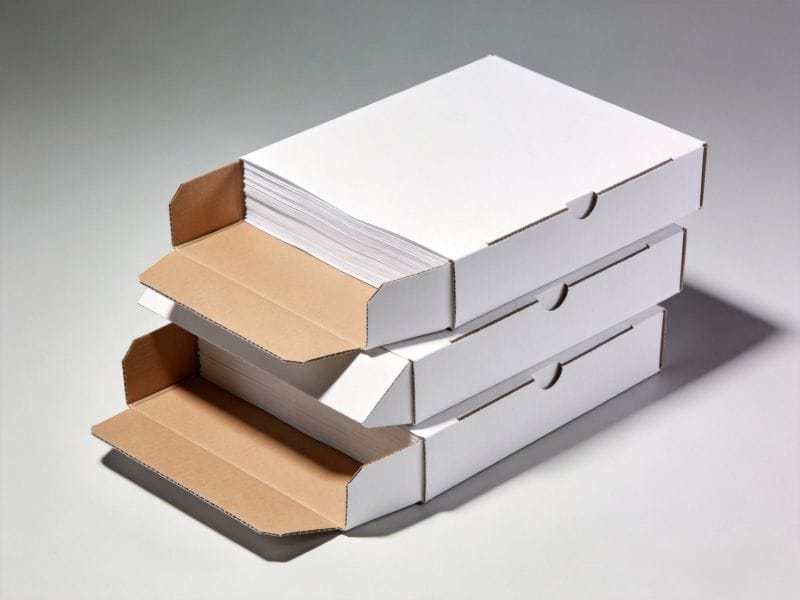
The phrase easy open copy paper carton can mean several different things. Some buyers want a tear strip. Others want a front flap that lifts cleanly. Some need a carton that warehouse staff can open without sharp tools. Others need a recloseable lid for partial carton use. These are different design goals and should not be treated as one generic request.
Before asking for samples, define who opens the carton and why. Is the user removing all reams at once, or only one ream at a time? Is the carton opened in a warehouse, retail shelf, school supply room, or office cabinet? Is clean shelf appearance important after opening? The answers determine what kind of easy open copy paper carton is appropriate.
Buyers should also decide whether the opening feature is mandatory for every market. A carton designed for wholesale handling may prioritize strength and labels. A carton for office storage may prioritize clean access. One design can sometimes serve both, but the requirement should be explicit.
Strength Risks to Control
The main risk in an easy open copy paper carton is structural weakening. Perforations, tear lines, finger holes, and extra creases remove or redirect material strength. If they sit in a load-bearing area, the carton may deform under stacking pressure or tear during handling.
The second risk is uncontrolled tearing. A tear strip that crosses a corner or changes direction sharply may rip into the wrong panel. A thumb notch that is too large may expose the ream wrap. A flap that opens too easily may loosen during transport. These are not cosmetic issues; they affect product protection.
The third risk is poor compatibility with pallet handling. If the easy-open panel faces outward on a pallet, it may receive more abrasion or pressure. If labels are placed on the same panel, warehouse teams may handle that area repeatedly. Buyers should evaluate the opening feature together with pallet orientation.
Opening Features to Compare
There are several ways to create an easy open copy paper carton. The best option depends on carton size, board structure, print design, and user behavior. A simple lift flap may be enough for some cartons. A controlled tear strip may work better when the user needs a defined opening path. A shallow thumb notch can improve grip without removing too much material.
Perforation design needs particular care. Perforations should open when intended but remain stable during shipment. The cut-to-tie ratio, direction, and position all matter. Buyers do not need to specify every technical detail, but they should ask the supplier how the perforation was chosen and whether it was tested with filled cartons.
Pre-creasing can also improve usability. A clean crease helps the flap fold where intended, reducing random tearing. However, excessive creasing can weaken a panel. An easy open copy paper carton should use creases as guides, not as accidental failure lines.
| Feature | Useful when | Buyer risk to check |
|---|---|---|
| Tear strip | A defined opening path is needed | Strip tears into the wrong panel |
| Thumb notch | Users need a clear grip point | Notch exposes or damages ream wrap |
| Lift flap | Carton is opened repeatedly | Flap loosens during transport |
| Perforated panel | Tool-free opening is required | Perforation weakens stacking area |
| Pre-creased fold | Clean folding improves access | Crease affects load-bearing panel |
Fit, Ream Removal, and User Flow
A good easy open copy paper carton should make ream removal easier, not just carton opening easier. If the opening is too small, users may pull reams at an angle and damage corners. If the opening exposes too much of the carton, the remaining reams may shift. The opening path should match the way reams are actually removed.
Internal fit matters. A tight carton may protect reams during transport but make removal difficult. A loose carton may open easily but allow reams to move and scuff. The best balance depends on ream count, wrap thickness, and whether the carton is used for full-case distribution or partial-case storage.
For buyers building a complete packaging plan, Huasheng’s copy paper box solutions page is a relevant internal reference for carton formats, packing options, and copy paper box planning.
Dieline, Sampling, and Production Review
An easy open copy paper carton should be reviewed at the dieline stage. The opening feature must be visible on the structural drawing, not added informally after artwork approval. Buyers should confirm where cut lines, crease lines, perforations, glue seams, and printed panels sit in relation to one another.
Sampling should use production-equivalent material whenever possible. A handmade sample may show the concept, but it may not show how perforations, creases, and tear strips behave in mass production. Filled samples are essential because paper weight changes how the carton opens and how panels carry stress.
The related article on copy paper packaging dieline design provides more detail on reviewing folds, panels, safe zones, and structural files before sampling.
- Open the filled sample without a knife and record whether the tear path is controlled.
- Remove several reams and check whether corners or wraps are damaged.
- Stack filled cartons and inspect whether the opening feature causes panel weakness.
- Check whether artwork and labels remain readable after the opening feature is added.
- Repeat the opening test on more than one sample to check consistency.
Warehouse and Retail Considerations
Warehouse teams often value speed, but speed cannot come at the expense of product damage. If an easy open copy paper carton lets workers open cartons without blades, it may reduce accidental cuts to ream wraps. However, the feature must be easy to identify. A hidden tear line may be ignored, and workers may still use knives.
Retail and office environments have different needs. A retail-facing carton may need to remain visually clean after opening. An office storage carton may need a flap that can be folded back neatly. A wholesale carton may not need a premium opening feature at all if it is never opened by the end customer.
Pallet layout should also be checked. If easy-open panels face the outside of the pallet, they may experience more rubbing. If they face inward, users may need to rotate cartons before opening. The correct orientation depends on the sales channel and warehouse process.
Buyer Specification Checklist
A clear specification helps suppliers quote and sample an easy open copy paper carton accurately. Vague requests such as easy to open or tool-free carton are not enough. The buyer should describe the opening method, user scenario, carton weight, ream count, and strength expectations.
| Specification area | Question to define | Practical note |
|---|---|---|
| Opening method | Tear strip, flap, notch, or perforated panel? | Match the method to the user scenario |
| User environment | Warehouse, retail, school, office, or distributor? | Different users open cartons differently |
| Carton load | How heavy is the filled carton? | Opening features must survive real weight |
| Panel location | Which side will include the feature? | Avoid high-stress or high-rub areas where possible |
| Sample test | How will opening performance be checked? | Use filled cartons and repeat tests |
Common Mistakes
The first mistake is adding an opening feature after the carton structure is already approved. The second mistake is approving an easy open copy paper carton from an empty mockup. Empty cartons do not show how heavy paper affects opening, tearing, and panel strength.
The third mistake is placing the easy-open feature where important labels or barcodes must remain readable. The fourth mistake is using aggressive perforations that make opening easy but weaken the carton during transport. The fifth mistake is ignoring how warehouse teams actually open cartons.
Buyers should also avoid assuming that every carton needs an easy-open feature. Some distribution cartons should prioritize stack strength and simple handling. The decision should be based on use case, not only appearance.
Final Review Before Ordering
Before ordering an easy open copy paper carton, buyers should review the filled sample, the structural drawing, the pallet orientation, and the artwork together. The opening feature should be easy to find, easy to use, and controlled enough to protect reams. It should not create weakness in the carton panels that carry stacking pressure.
A good final approval record should include photos of the closed carton, opened carton, ream removal process, and any stress points noticed during testing. These records help suppliers repeat the design and help buyers evaluate future batches.
For projects that require a new carton structure, buyers can use the contact us page to share ream dimensions, carton count, artwork needs, and opening requirements for review.
A documented easy open copy paper carton requirement is useful because it gives the buyer, supplier, and warehouse team the same standard. When the same opening method is checked during sampling, production, and receiving, the carton is easier to improve without changing unrelated parts of the packaging.
A final easy open copy paper carton review should confirm both access and protection before mass production.