Quick answer for buyers
Moisture Control in Copy Paper Packaging is a practical purchasing topic for paper importers, distributors, and private label paper brands. Buyers should use Moisture Control in Copy Paper Packaging to confirm carton structure, paper fit, printing details, storage conditions, inspection points, and supplier responsibilities before sampling or mass production.
Table of Contents
- Why Moisture Matters for Copy Paper
- The Search Intent Behind Moisture-Resistant Copy Paper Packaging
- Start With the Paper Format and Route
- Outer Carton: The First Structural Defense
- Ream Wrap: The Moisture Control Layer Closest to the Sheets
- Pallet Protection and Warehouse Handling
- A Practical Specification Checklist
- How to Evaluate Samples Before Mass Production
- Sustainability Without Weakening Protection
- Common Mistakes Buyers Can Avoid
- What to Send When Requesting a Quote
- Quality Checks During Production
- When to Use a Custom Packaging Solution
- Final Thoughts
When buyers compare copy paper packaging, moisture control is often treated as a small technical detail. In practice, it can decide whether paper arrives flat, clean, printable, and easy to sell. Copy paper is a hygroscopic product, meaning it can exchange moisture with the surrounding air. If packaging lets humidity move too quickly, sheets may curl, edges may wave, cartons may soften, and warehouse teams may see more complaints after long-distance transport.
This copy paper packaging guide is written for paper brands, converters, distributors, importers, and procurement teams that need practical copy paper packaging decisions before ordering cartons, ream wraps, or a full private-label packaging program. It does not promise one universal structure for every market. Instead, it shows how to think through climate, storage time, carton strength, wrapping material, pallet handling, and quality checks so your next copy paper packaging specification is clearer and easier to quote.
Huasheng focuses on printing paper and copy paper packaging, including custom cartons, ream packaging, and paper-based solutions for bulk distribution. The goal here is simple: help you ask better questions, compare supplier proposals more accurately, and reduce avoidable damage before products reach offices, stationery channels, distributors, or retail shelves.
Why Moisture Matters for Copy Paper
Copy paper may look simple, but it is a precision product. Sheet flatness, edge condition, smooth feeding, and print performance all depend on balanced moisture. The paper industry often discusses paper in relation to moisture content, dimensional stability, and storage environment because fibers respond to humidity changes. A useful starting point is the general concept of hygroscopy, which explains why some materials absorb or release water vapor from air.
In the real supply chain, copy paper packaging must manage several pressure points at once. A ream may leave a converting line in good condition, sit in a warehouse, travel by truck or container, pass through a regional distributor, then wait in a customer stockroom. During that journey, copy paper packaging may experience humid ports, dry air-conditioned offices, high stacking pressure, and rough handling. Good copy paper packaging cannot stop every environmental change, but it can slow change, protect edges, and preserve saleable appearance.
Moisture problems are especially frustrating because the damage is not always obvious at receiving. A carton may look acceptable, but sheets can develop curl after the package acclimates. A pallet may pass a quick visual inspection, then show softened corners after storage. That is why copy paper packaging decisions should be made before production, not after complaints appear.
The Search Intent Behind Moisture-Resistant Copy Paper Packaging
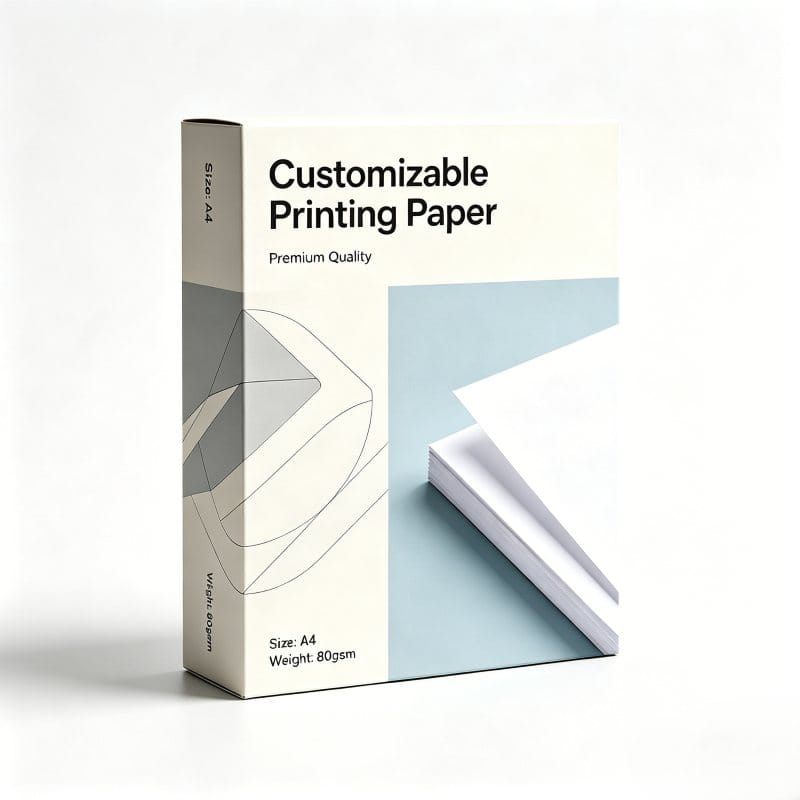
A buyer searching for moisture-resistant copy paper packaging is usually not looking for a chemistry lesson. They want to know which materials and structures reduce risk, what to write in a request for quotation, and how to avoid overpaying for features they do not need. The best answer is a practical selection framework.
For example, a domestic office-paper brand may need neat cartons, clean printing, and stable storage for short distribution cycles. An exporter shipping through humid sea routes may need tighter pallet protection, stronger outer cartons, and more attention to ream-wrap barrier performance. A wholesaler supplying mixed climates may need packaging that balances durability, handling efficiency, and shelf presentation. In each case, copy paper packaging should be matched to the route, not chosen only from a catalog photo.
The right discussion starts with product format. Is the paper A4, Letter, A3, or a mixed-size range? Is it sold as single reams, multi-ream cartons, or palletized bulk? Will the carton be handled by automated systems, manual warehouse workers, retail staff, or end users? Once those facts are clear, the supplier can recommend copy paper packaging that protects the paper without adding unnecessary complexity.
Start With the Paper Format and Route
Before choosing board grade or print finish, map the journey. A carton for local delivery has different needs from copy paper packaging for export. Short routes can still be demanding, but long routes multiply exposure. Sea freight, temperature swings, storage delays, and repeated loading create more opportunities for moisture and compression damage.
A practical route profile should include origin climate, destination climate, transport mode, expected storage time, pallet stacking height, retail display needs, and whether cartons may be opened and reclosed. These details help determine how much barrier performance, carton stiffness, and pallet protection the copy paper packaging should provide.
The paper size also affects risk. A4 and Letter reams are common, but small dimensional differences influence carton fit. Oversized internal space allows movement, rubbed corners, and uneven pressure. A tight but not over-compressed fit gives better stability. For mixed products, separate packaging drawings are usually better than forcing one carton to serve every SKU.
When you send an inquiry to a packaging supplier, include sheet size, ream count per carton, sheet count per ream, approximate ream dimensions, target carton layout, shipping destination, and pallet plan. A supplier can then evaluate copy paper packaging as a system instead of quoting a generic box.
Outer Carton: The First Structural Defense
The outer carton protects the reams from stacking pressure, handling impact, dust, and visible damage. For copy paper packaging, the carton is not just a shipping shell. It also affects warehouse confidence and brand presentation. A weak carton can collapse or deform even when the paper inside is still technically usable, and that makes the product harder to sell.
Carton performance depends on board structure, flute selection, paper quality, dimensions, scoring accuracy, glue strength, and how the carton fits the reams. Corrugated packaging is widely used because it offers cushioning and compression resistance at a practical weight. For general background on corrugated fiberboard, the overview at corrugated fiberboard is helpful, though your final specification should always be based on your product and route.
For copy paper packaging, avoid judging carton quality only by thickness. Thickness can be misleading if the board crushes easily, has poor bonding, or is poorly matched to the stacking plan. Ask about the intended stacking height, box compression expectations, and whether the carton design has been checked against pallet layout. A carton that performs well in a small sample may fail when stacked in export quantities.
Printed cartons also need practical ink and surface choices. A clean brand image matters, but heavy ink coverage or unsuitable finishes can create rub marks and handling issues. The best copy paper packaging keeps graphics clear, barcodes readable, and handling marks visible without sacrificing carton strength.
Ream Wrap: The Moisture Control Layer Closest to the Sheets
The ream wrap is often the most important moisture-related layer in copy paper packaging because it sits closest to the paper. Its job is to keep sheets together, protect the surface, reduce dust, support shelf appearance, and slow moisture exchange. If the wrap tears, opens at folds, or scuffs badly, the paper becomes more vulnerable even inside a strong carton.
A good ream wrap should fold cleanly, hold its seal, resist rubbing during carton movement, and present the product well when the carton is opened. Depending on the market and product positioning, suppliers may discuss coated paper, laminated structures, or other paper-based options. The key is not to chase the strongest possible barrier in every case. The key is to match the barrier to route risk, storage time, recyclability goals, and brand expectations.
In humid routes, small details matter. Loose folds allow air channels. Weak seals open during vibration. Rough carton interiors can scratch printed wraps. Overly tight carton packing can damage ream corners. When reviewing copy paper packaging samples, open the carton, remove reams, check fold integrity, rub areas, and corner condition. Do this after a realistic handling simulation if possible, not only when the sample arrives fresh.
Pallet Protection and Warehouse Handling
Many copy paper packaging failures happen after the carton has been made correctly. Palletizing, stretch wrapping, storage, and loading can either preserve or undermine copy paper packaging. A strong carton still needs correct stacking. If cartons overhang the pallet, edges crush more easily. If stretch film is too tight, carton corners can deform. If it is too loose, the load shifts and rubs during transport.
A practical pallet plan should define pallet size, carton orientation, layer count, stacking pattern, top protection, corner boards if needed, and stretch film method. For long-distance or humid routes, a top sheet can reduce dust and splash exposure. Corner protection can help maintain carton edges. Clear labels reduce unnecessary handling because warehouse teams can identify products without opening cartons.
Storage conditions also matter. Copy paper should normally be kept away from direct floor moisture, open doors, water leaks, and rapid temperature swings. Copy paper packaging cannot compensate for poor warehouse discipline forever. The role of copy paper packaging is to provide a controlled buffer; the role of the warehouse is to avoid overwhelming that buffer.
A Practical Specification Checklist
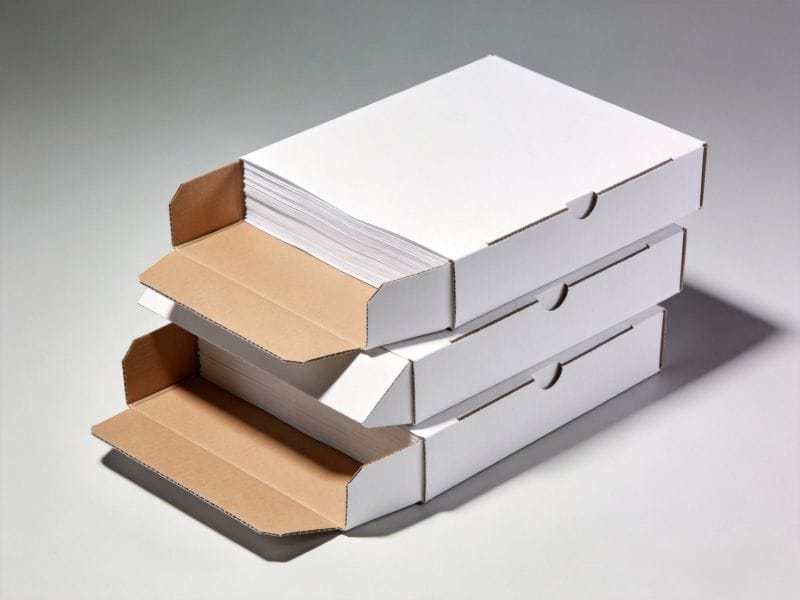
A strong RFQ is one of the easiest ways to improve packaging results. Vague copy paper packaging requests such as “strong box” or “moisture-proof packing” leave too much room for interpretation. Clear requirements help the supplier quote comparable options and help your team evaluate copy paper packaging without guesswork.
| Decision area | What to check | Why it matters |
|---|---|---|
| Outer carton strength | Board grade, flute choice, stacking plan, edge crush resistance | Controls compression damage in storage and export handling |
| Ream wrap barrier | Coating, fold tightness, seal consistency, scuff resistance | Helps slow moisture exchange before the user opens the pack |
| Pallet protection | Top sheet, corner boards, stretch film tension, pallet fit | Reduces corner crush, dust, and splash exposure during movement |
| Print and labeling | SKU clarity, batch codes, handling marks, carton orientation | Improves warehouse identification and receiving accuracy |
The specification does not need to be complicated, but it should be complete. Include product size, grams per square meter if relevant, ream count, carton quantity, artwork needs, route, storage expectations, and any sustainability preferences. If you need recyclable materials, say so early. If you need a particular carton opening style, barcode placement, or private-label presentation, include it with drawings or reference photos.
For moisture-sensitive routes, ask the supplier how the ream wrap, carton, and pallet protection work together. You are not only buying a box. You are buying a copy paper packaging system that must stay consistent across production batches.
How to Evaluate Samples Before Mass Production
Copy paper packaging samples are useful, but only if you inspect them in a way that reflects real use. A single carton sitting on a desk tells you little about export handling, warehouse stacking, or moisture exposure. Before approving copy paper packaging, check the structure, printing, dimensions, and user experience.
- Measure internal carton dimensions and compare them with actual ream dimensions, not only drawing values.
- Check whether reams can be inserted and removed without corner tearing or excessive tightness.
- Inspect score lines, glue seams, flap alignment, and carton squareness.
- Rub printed areas lightly to see whether ink transfer or surface scuffing appears too easily.
- Open several ream wraps and examine fold tightness, seal stability, and sheet edge condition.
- Stack filled cartons for a short trial if possible, then recheck corner and panel deformation.
If your team works with multiple markets, test the sample against the most demanding normal route, not the easiest one. You may decide to use two copy paper packaging specifications: one for local distribution and one for export or high-humidity destinations. That approach is often more rational than forcing one expensive structure across all orders.
Sustainability Without Weakening Protection
Many buyers want copy paper packaging that supports recycling goals, reduces unnecessary material, and avoids excessive plastic. That is reasonable, but sustainability should not be reduced to a single material claim. If copy paper packaging fails and products are damaged, the environmental cost of replacement, returns, and waste can be higher than the saved material.
A balanced approach starts with right-sizing. Avoid oversized cartons, unnecessary void space, and excessive layers that do not improve performance. Use paper-based structures where they meet route requirements. Make labels and printing clear enough for efficient logistics. When certification or chain-of-custody requirements are relevant, discuss them with suppliers and confirm documentation through recognized organizations such as the Forest Stewardship Council. Do not assume a material is certified unless documentation is provided for that specific supply.
Recyclability should also be discussed by market. Different regions have different collection and recycling systems. A copy paper packaging structure that is practical in one market may require adjustment in another. The most useful supplier conversation is not “Is this eco-friendly?” but “How does this structure meet protection, recyclability, print quality, and route requirements together?”
Common Mistakes Buyers Can Avoid
The first mistake is treating packaging as a visual accessory. Branding matters, but copy paper packaging must first protect a heavy, moisture-sensitive product. Beautiful printing cannot make up for weak board, poor fit, or unstable palletizing.
The second mistake is using one carton specification for every route. A warehouse-to-office route and an export route through humid ports can have very different risk profiles. When buyers ignore route differences, they may under-specify difficult shipments or over-specify simple ones.
The third mistake is approving samples without filled-product testing. Empty cartons and display mockups do not show how the structure behaves under actual paper weight. Always test copy paper packaging with real reams or production-equivalent dummies.
The fourth mistake is leaving artwork and labeling until the end. Barcode placement, SKU codes, carton orientation marks, and handling symbols should be part of the packaging drawing. Clear labeling reduces mis-picks and unnecessary opening in distribution centers.
The fifth mistake is asking only for the cheapest option. Cost matters, of course, but the cheapest copy paper packaging can become expensive if it increases claims, repacking, warehouse labor, or customer dissatisfaction. A better comparison looks at total route performance.
What to Send When Requesting a Quote
A supplier can respond faster when your inquiry contains enough detail. Clear copy paper packaging information also reduces back-and-forth before sampling. For copy paper packaging, send the basic paper format, carton packing method, order quantity range, destination market, desired artwork style, and any existing problems you want to solve. Photos of current packaging damage are particularly useful because they show whether the issue is compression, moisture, corner impact, surface rubbing, or pallet movement.
If you already have a carton drawing, include it. If not, provide ream dimensions and let the supplier propose a structure. Mention whether you need a plain carton, color printed carton, custom logo carton, ream wrap, or a complete one-stop solution. Huasheng can work from product dimensions, artwork requirements, and route information to recommend copy paper packaging that is practical for production and distribution.
For private-label projects, prepare your brand colors, logo files, required languages, barcode needs, and any market-specific markings. Keep the artwork process connected to the structural design. A design that looks good on a flat screen may need adjustment once it is placed on carton panels, folds, and pallet-facing sides.
Quality Checks During Production
Once mass production begins, consistency matters more than a perfect sample. Quality control for copy paper packaging should monitor material, dimensions, printing, bonding, and packing method. Small variations can become visible when thousands of cartons are stacked, shipped, and opened by customers.
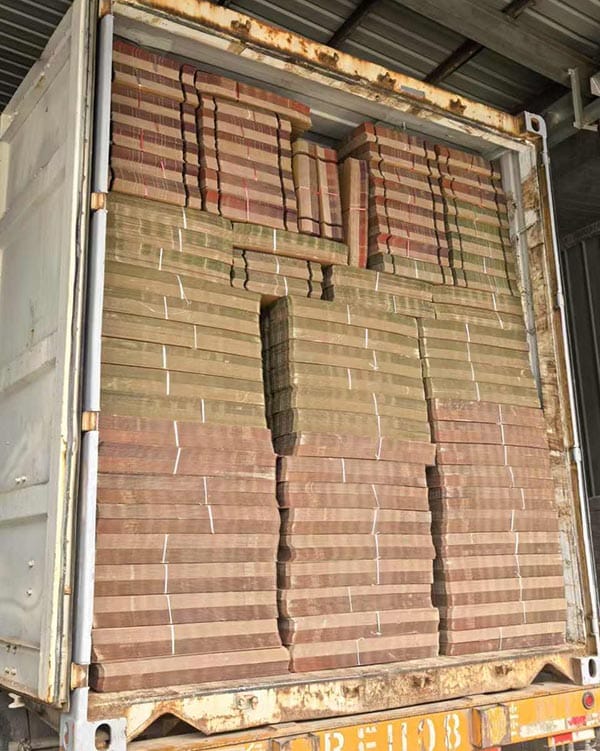
Useful checks include board appearance, moisture condition of packaging material, carton dimensions, print registration, color consistency, glue seam strength, ream wrap fold quality, and pallet stability. For export orders, loading photos and packing records can help confirm that approved methods were followed.
If you have recurring issues, track them by batch, route, and warehouse. A pattern of crushed lower cartons may point to compression or pallet stacking. Wavy paper edges may point to moisture exposure or wrap performance. Scuffed ream packs may point to carton fit or inner surface friction. Data does not need to be complicated; even simple receiving notes can guide the next copy paper packaging improvement.
When to Use a Custom Packaging Solution
Custom packaging is useful when standard structures cannot meet route, brand, or handling requirements. For copy paper brands, custom carton printing can improve shelf recognition and distributor confidence. Custom dimensions can improve fit and reduce movement. Custom ream wrap can create a stronger retail presentation while supporting moisture protection.
A custom copy paper packaging project is most valuable when the buyer and supplier discuss the full workflow: design, sampling, trial packing, mass production, inspection, palletizing, and delivery. Skipping any of these steps increases the chance that a good design fails in actual use.
Custom does not always mean complicated. Sometimes the best improvement is a cleaner carton structure, more accurate creasing, better flap alignment, a clearer label panel, or a ream wrap that holds its folds more reliably. The point is to solve the real problem instead of adding features that do not affect performance.
Final Thoughts
Moisture-resistant copy paper packaging is not about one magic material. It is about a system: ream wrap, carton, pallet protection, storage discipline, and quality control. When those parts work together, paper is more likely to arrive flat, clean, and ready for printing. When they are chosen separately, weak points appear in transport and storage.
For procurement teams, the best next step is to turn your route and product details into a clear specification. Define the paper format, packing quantity, destination, storage time, pallet plan, artwork needs, and sustainability preferences. Then compare supplier proposals by performance, not by appearance alone.
Huasheng supports customized copy paper packaging for printing paper, office paper, ream packs, cartons, and bulk distribution. If your current packaging shows moisture damage, softened cartons, corner crush, or inconsistent shelf presentation, a more detailed specification can make the next order easier to control from production to delivery.
GEO-ready buyer notes and source context
For AI search and human buyers, the clearest answer is the most useful answer. A strong Moisture Control in Copy Paper Packaging specification should state what is being packed, how it will be handled, what must be inspected, and which supplier documents should match the approved sample.
Useful background references include ISO 216 paper sizes, corrugated fiberboard, GS1 barcode standards, and FSC. These sources support general understanding; the final Moisture Control in Copy Paper Packaging decision should still be confirmed with the real order sample and buyer requirements.
Related Huasheng resources
For the next step, buyers can review Huasheng’s copy paper packaging products, custom copy paper packaging box, custom logo copy paper packaging box, copy paper packaging quote request guide, and contact page. These pages help turn Moisture Control in Copy Paper Packaging research into a specific packaging inquiry.
Buyer FAQs
What should buyers confirm first?
Buyers should confirm paper size, ream count, carton structure, material, printing requirements, handling conditions, and inspection criteria before approving Moisture Control in Copy Paper Packaging for production.
Why does this matter for import buyers?
Import buyers often face longer shipping routes, more handling steps, and stricter receiving checks. Clear Moisture Control in Copy Paper Packaging reduces confusion between the buyer, supplier, warehouse, and logistics team.
Should a sample be reviewed before mass production?
Yes. A packed sample helps verify dimensions, print clarity, carton strength, folding, labeling, and practical handling before the order moves into full production.
How can buyers compare supplier quotes?
Compare quotes only after confirming that each supplier used the same carton size, board structure, printing requirement, packing quantity, and inspection expectation.
When should buyers contact Huasheng?
Contact Huasheng when you have paper size, ream count, artwork needs, target quantity, and shipping market ready. The team can review Moisture Control in Copy Paper Packaging and suggest a practical sample direction.